Saturday, 26 October 2013

SAY NO TO RACISM.......ONE PEOPLE

Yaya Toure: Russian racism could lead black players to boycott 2018 World Cup

The Manchester City midfielder was dismayed to be the target for abuse during his side's win over CSKA Moscow
No respect: Yaya Toure slammed Russian fans' racial abuse
Action Images
Yaya Toure has warned that black players could boycott the 2018 World Cup if Russia does not tackle its racism problem.
Toure was furious to be subjected to monkey taunts during Manchester City’s Champions League win over CSKA Moscow on Wednesday.
UEFA last night launched disciplinary action against the Russian champions, although a club spokesman claimed no rascist behaviour took place .
Africa will have at least five teams at the 2018 Finals and the Ivory Coast star claims black players need to be assured they will not be racially abused.
“Of course they do,” said Toure. “It’s very important. Otherwise it we are not confident coming to the World Cup in Russia, we don’t come.
“Of course, it’s a problem here, it happens all the time. I played in Ukraine, which was quite good, but they said some things as well.
“We have come here and it is the same again. I don’t know why it happens in football. I don’t know why you don’t get something like this in rugby or handball or any other sport, it’s just football.”
The Kick It Out anti-racism campaign have given Toure their full support and have grave concerns about Russia staging the World Cup in five years’ time.
“Things are not perfect in this country,” they said in a statement. “But this type of abuse is a depressing throwback and raises questions around the suitability of Russia as World Cup hosts.”
Manchester City's Yaya Toure gestures towards the fans
Frustration: Toure was subjected to monkey taunts in Moscow
Action Images
Russia’s 2018 World Cup organising committee claim they are already taking steps to stamp out racism.
“The 2018 FIFA World Cup in Russia can act as a catalyst to positively change the mindsets and behaviour across all involved in Russian Football over the next four years,” they said in a statement.
CSKA dispute Toure’s claims and quoted their Ivory Coast striker Seydou Doumbia as accusing his compatriot of exaggeration.
“Having carefully studied the video of the game, we found no racist insults from fans of CSKA,” said the club in a statement.
Doumbia said: “I didn’t hear anything like that from the CSKA fans. So my Ivory Coast colleague is clearly exaggerating.”
FIFPro, the worldwide players’union, claim UEFA ignored their own protocol when Toure complained to referee Ovidiu Hategan by not warning the fans to behave before taking the teams off.
FIFPro European president and PFA deputy chief-executive Bobby Barnes said: “We’re very disappointed that a clear agreed protocol which is designed to deal with these situations was not effected.”

Norway rejects US request to destroy Syrian chemical weapons

Norway rejects US request to destroy Syrian chemical weapons

Norway has turned down a US request to help destroy Syria's chemical arsenal, saying it is unable to meet the deadline laid down in the United Nations-backed disarmament plan

Residents run from a fire at a gasoline and oil shop in Aleppo's Bustan Al-Qasr neighbourhood.
Residents run from a fire at a gasoline and oil shop in Aleppo's Bustan Al-Qasr neighbourhood in 
 
Syria. Photo: REUTERS
Norway has rejected a request from the United States to help destroy Syria's chemical arsenal on its soil, saying it did not have the capabilities to complete the task in the given timeframe.
"With the understanding of the United States we have concluded that... it's no longer appropriate to consider Norway as a site for the destruction (of the weapons)," Foreign Minister Boerge Brende said on Friday.
He said the decision was made based on the deadlines laid out in the UN resolution mandating the destruction of the weapons.
Syria agreed to handover its chemical arsenal as part of a UN-backed disarmament bid that averted US military strikes after the August 21 sarin gas attack, which killed hundreds of people.
Mr Brende said the US was looking at other alternatives but did not give details.
The minister said Norway hadn't been able to identify a port that could receive the weapons and didn't have the capacity to treat some of the waste products resulting from the destruction of the munitions.
In a webcast news conference, Mr Brende said both the US and Norway had agreed that there was no point continuing the evaluation of the country as a destruction site.
Norway announced earlier this week that it was one of the nations that had been asked to take part in the destruction of 50 metric tonnes of mixed chemicals in the form of mustard gas and some 300-500 metric tonnes of materials needed to make nerve agents.
The US and Russia have set a mid-2014 deadline for the destruction of Syria's arsenal.
Syria was on Thursday expected to hand over a detailed plan for destroying its chemical arsenal though the UN had not confirmed by Friday morning whether or not they had received it.
Syrian troops were on Thursday closing in on the Damascus suburbs which were hit by chemical weapons in August. The Assad government continues to deny responsibility for the attack.
The Syrian opposition meanwhile said it would meet on November 9 to decide whether to attend a Geneva peace conference that the United Nations is trying to convene in parallel with chemical disarmament efforts

The West must be flexible in dealing with Iran

The West must be flexible in dealing with Iran

Tehran will forswear nuclear weapons if President Obama is prepared to play ball

'From my own involvement as Britain’s permanent representative to the IAEA, I can testify to the acumen of President Rouhani'
'From my own involvement as Britain’s permanent representative to the IAEA, I can testify to the acumen of President Rouhani' Photo: AP
By his diplomacy since taking office, President Rouhani of Iran has done enough to suggest that, after eight bleak years, the reins of government are once more in the hands of men with whom the West can do business. Drawing a parallel with the situation in 1985 when Mikhail Gorbachev took over the leadership of the Soviet Union would not be inappropriate. It is best not done in the hearing of Mr Rouhani’s Iranian well-wishers, though, since they are aware that many Russians now take a dim view of Mr Gorbachev and his policies.
President Obama, for his part, has shown that he understands a moment of opportunity has arrived. A negotiated settlement of the dispute over Iran’s nuclear programme would remove the pressure to use force to knock out nuclear facilities, with the incalculable consequences which that would entail.
The simplest way of negotiating a solution, when talks get under way in Geneva on Tuesday, would be to rely on the core provisions of the Nuclear Non-Proliferation Treaty (NPT) and on the ability of Mr Rouhani’s new government to calculate what is in Iran’s best interest. The NPT allows Iran to make peaceful use of nuclear technologies in return for a binding commitment not to acquire nuclear weapons and frequent monitoring of its facilities by international inspectors.
When it comes to evaluating the national interest, Mr Rouhani and his foreign minister, Javad Zarif, have form. They were Britain’s interlocutors in 2003, when the UK, France and Germany persuaded Iran to halt uranium enrichment for two years and cooperate with the International Atomic Energy Agency (IAEA). From my own involvement as Britain’s permanent representative to the IAEA, I can testify to their acumen.
In this case, Iran’s interest is weighted towards not making nuclear weapons. It has no need of a nuclear deterrent now that Saddam Hussein and his nuclear ambitions are as Nineveh and Tyre. Iran cannot afford the economic and humanitarian consequences of crossing the threshold that separates a civilian from a military nuclear programme. Its security could be undermined by a step that provoked one of its Arab neighbours to build an atom bomb.
I want to stress, though, a further consideration. Mr Rouhani showed in 2003, and again last month in his statement to the UN General Assembly, that he is far from indifferent to what the world thinks of Iran. He will know that if Iran is to be seen as a respected participant in an international order resting on the rule of law, his country must remain an NPT “Non-Nuclear Weapon State”, alongside 185 other states.
During the Cold War, when deep mistrust between the US and the Soviet Union did not prevent a series of arms control agreements, the most effective guarantee that both sides would honour their word proved to be national interest, backed by rigorous verification. But there is no prospect that the US and its allies will be satisfied with an agreement which Iran has little or no interest in violating. They will want practical demonstrations – not just promises – that Iran has no intention of producing the highly enriched uranium or plutonium needed for a nuclear weapon. Fortunately, Mr Rouhani could be ready to meet them on this.
What form might such demonstrations take? Tougher safeguards would be essential, notably real-time surveillance of Iran’s uranium enrichment plants under the IAEA’s Additional Protocol. This would mean that, if Iran were to start enriching uranium above levels needed for civilian purposes, we would know almost immediately and would have time to react.
Particularly reassuring would be a reduction in the size of Iran’s enrichment capacity, and the dismantling of 3,000 centrifuges of a more efficient design than the bulk of those at Iran’s disposal.
But “roll-back” can be hard to obtain in arms control negotiations. So, as an alternative, the negotiators may have to explore whether there is some way of configuring Iran’s centrifuge cascades to lengthen the time needed to produce weapons-grade uranium or render production impossible. In addition, Iran could be asked to remove its existing stockpile of low-enriched uranium from its two enrichment plants and place it under IAEA seal, or even export it.
To obtain these derogations from the NPT norm, Western negotiators will have to offer two things. First, the progressive dismantling of the sanctions that have been imposed since 2007, especially on financial transactions and oil exports. The second is an unequivocal assurance that, after a transitional period, the US and its allies will accept Iran’s freedom to make peaceful use of nuclear technologies, including enrichment to produce fuel for reactors.
Any reluctance to provide an “end-state assurance” early on could be fatal. So it is worrying that President Obama will be under pressure from Israel and Congress to withhold it. If the President has to decide between losing this opportunity and securing an agreement that can enhance his legacy, will the choice be a “no-brainer”?

Iran could develop nuclear weapons capability despite sanctions......

Iran could develop nuclear weapons capability despite sanctions......

Iran has foreign exchange reserves that cover less than three months of imports, a new report says, but warned that the regime could still “muddle through” long enough to develop a nuclear weapons capability by mid-2014.

Iranian rials
The report found that Iran’s banking system was under growing stress and would have little capacity to defend its currency if it came under renewed pressure.  Photo: ALI AL-SAADI/GETTY IMAGES
As the US Congress debate further sanctions, the report found that Irans banking system was under growing stress and would have little capacity to defend its currency if it came under renewed pressure.
The state of Iran’s finances helped explain the sudden insistence of Iran’s new president Hassan Rouhani on a “quick”, three-to-six month deal being brokered between Tehran and the international P5+1 grouping. Talks are due to open in Geneva on October 15.
“We think the reaction of Rouhani this past week and his desire for a short-term deal can be partly explained by the fact that Iran’s finances are much worse than he and his team had expected to see when they first entered office,” said Mark Dubowitz of the Foundation for Defence of Democracies a think-tank that has urged a tough line on Tehran.
Iran now has about $80bn in forex reserves, of which only about $20bn is immediately accessible, according to estimates in the report that was co-authored with Roubini Global Economics, an international consultancy.
Under the terms of sanctions, Iran has been able to sell oil to some countries, such as China, Japan and India, but can only spend the proceeds, estimated at around $50bn, on humanitarian and non-sanctioned goods.
“These funds would not be available to Iran if the currency came under pressure,” Rachel Ziemba, Roubini Global Economics, who said that Iran’s economy was now ranked well below most in the Middle East and emerging market countries as its banking system came under increased strain.
“The economy has become less flexible which reduces the government’s ability to deal with external shocks, and that in our view may account for a more accelerated political timeline that members of the Iranian administration have put forward in recent days,” she added.
Those who remain sceptical about Iran’s sudden softening in recent months, have argued that sanctions must be tightened, not relaxed, if Iran is to be forced to follow through on stated desire to resolve international differences over its nuclear programme.
The Israeli prime minister Benjamin Netanyahu used his speech at the United Nations this week to call for the continued tightening of sanctions, describing Mr Rouhani as a “wolf in sheep’s clothing” and promising unilateral military action if Iran did develop nuclear weapons.
Despite the country’s parlous economic state, sceptics argue that the country’s leadership still holds enough off-book reserves to muddle through for the 12 months needed to install enough centrifuges to reach the point-of-no-return in developing a theoretical nuclear weapons capability.
“We believe that Iran is less than a year from reaching critical nuclear capability, despite these international sanctions that have been designed to prevent Iran from doing so,” said Mr Dubowitz, citing reserves held Iran’s Supreme Leader and the Revolutionary Guard.
“But our assessment is that Iran’s political timeline may be considerably shorter because there is considerable pressure on Rouhani to deliver on his commitment to get sanctions lifted, oil flowing and the economy stabilized as quickly as possible.”

FREEDOM AND DEMOCRACY ARE INSEPARABLE

DEMOCRACY

FREEDOM AND DEMOCRACY ARE INSEPARABLE
Restrictions on individual freedom increase overall social freedom when they are self-imposed by those over whom they are exercised and when they apply equally to all members of society.
That is, restrictions increase freedom when they are democratically established and administered.
This can only happen where there is relative equality of social power in horizontal social relationships and responsibility of social power in vertical relationships (i.e, between those exercising any concentrated power and those over whom it is exercised).
Freedom and democracy are inseparable for three reasons:
  • Both depend on equality of social power.
  • Through using their democratic institutions people can protect their freedom.
  • Through exercising their freedom people can protect their democratic institutions.
Consequently the two words are, in this social power analysis, interchangeable.
You can tell both how free and how democratic a society is by observing the extent to which its people can satisfy their wants through their existing social organization within the limitations of their environment.

WHAT IS DEMOCRACY?
Democracy is based on a faith in people - in the dignity and worth of the individual and in our shared humanity. It assumes that the basic objective of social action should be the welfare and happiness of the greatest number of people.
Democracy assumes that average citizens - with adequate education, information and institutions - will do a better job governing themselves and their communities, in the long run, than dictators and oligarchs.
Democracy is best defined as a society in which all social power is held by or is effectively responsible to the people over whom it is exercised.
This implies an even briefer definition:
Democracy is a society characterized by equality of social power.
Democracy is not merely a form of government, but a kind of society. Effective democracy requires democratic control of all social power, not merely government power.
Because government has the power to determine the rules governing the distribution of social power, democratic government institutions have historically - and rightly - been considered the keystone in the structure of democratic society. But voting is only one form of social power and representatives represent whatever power puts them in office. If political campaign expenses are paid by the wealthy, then that's who politicians listen to.
The vote alone is relatively ineffective unless there is also equality of other forms of social power, such as knowledge. Voters must have ways of learning about candidates and issues and when the media are controlled, once again, by those with money, then the ballot can't fulfill its democratic function.
These frustrations of the popular will - and the consequent popular dissatisfaction with the workings of the system - are signs that it is time to redistribute social power.

EQUALITY
What are we talking about when we say that equality is a basic requirement for effective democracy? Do we mean equality of income? No - most of us are willing to grant a higher income to those who contribute more valuable services to society. Equality of wealth? Perhaps, but how can we prevent inequality of income from leading to inequality of wealth? Equality before the law? Yes, definitely; but to be effective this depends on equality in other forms of social power, such as money to hire a lawyer. Equality of opportunity? Yes, certainly; but in practice does this mean opportunity for the wolf or opportunity for the sheep?
The Declaration of Independence says that "all men are created equal" - equal in the sight of God as members of the human race - as people. This is the essence of democratic society. Obviously all people aren't created equal in musical ability. Or mechanical ability. Or physical strength. Or even intellectual ability (whatever that means). Nor is there any agreed-upon way to add up the various inherited abilities of an individual to get their total "ability."
The greatest inequalities between individuals are not in their inherited characteristics, which are relatively unchangeable, but in the characteristics they acquire from their social environment as they grow up and take their place in society - personality, education, experience, wealth, contacts, etc. These things give people most of the social power they have.
The equality required by democracy is equality of social power. This doesn't mean there should - or could - be equality between all individuals in income or social position or any other particular form of social power. It means merely that there must be equality in the total complex of social power. Weakness in one form of power must be counterbalanced by strength in other forms. Nature offers us a model for such democratic balancing of power: Who can say which is more powerful - the panther, the skunk or the turtle?
Only a few people want to control or exploit others. Most people just want to live their lives in peace and security as respected members of their community. Consequently, to keep power-hungry people from unduly interfering in the lives of everyone else, defensive forms of social power are especially important in achieving an equally balanced distribution.
"Political democracy," "social democracy" and "economic democracy" are only meaningful in emphasizing single aspects of the total structure of social power. In reality these aspects are interdependent. Democracy is indivisible; it is a condition of the whole society. Power is fluid and transmutable. If there is concentrated, irresponsible power in some aspect of society, it will soon, like an insidious cancer, permeate the whole society.


INSTITUTIONAL KEYS TO DEMOCRACY
 
The distribution of social power is determined by our social institutions - laws, customs, forms of social organization.
Democracy is only possible where social institutions are designed to achieve and maintain equality of social power. There are three techniques to achieve this:
1) Diffusion of power (direct equality)
2) Constitutional responsibility of power (indirect equality: accountability)
3) Institutional checks and balances of power.
While these principles are part of our political tradition, we have yet to institutionalize them for all forms of social power in our society. And that is why we cannot even adequately maintain them in our political institutions.
Let's look at each one in more detail.

DIFFUSION OF POWER
The ideal of Jeffersonian democracy was to distribute power so widely and, through institutional safeguards, to KEEP it so diffuse that no individual or small group could exercise significant power over the rest of society.
Frontier American society - based upon individual land ownership by economically independent and largely self-sufficient farmers - approached this ideal very closely. Backing up his economic independence with his long-barrelled rifle, the typical American of 1787 had a great deal of social power. It was not power over other people, but bargaining power, the power of real alternatives, and the power to resist outside intervention. To put it crudely, he could tell the whole outside world to "go to Hell" without fear of serious reprisals.
Jefferson feared the development of industry and great cities because he realized that they must inevitably lead to increasing concentration of social power, both economic and governmental. Sure enough, the Industrial Revolution brought with it previously undreamed-of possibilities for concentration of social power. Mass production required concentrated economic power, and Big Business brought with it Big Labor and Big Government.
Today we live in a crowded, highly interdependent society in which few of us have much social power of our own. Our basic economic independence and security are gone. Most of us work for someone else and power-diffusing economic competition is kept within "comfortable" bounds by the few companies that dominate each industry.
If direct dispersion of power were the only way democracy could be realized, there would be little hope for it in modern industrial society. Luckily there are other principles upon which we can rely to achieve social power equity, principles we can find in the U. S. Constitution.

CONSTITUTIONAL RESPONSIBILITY OF POWER
Wherever social power becomes highly concentrated, the democratic principle of equality can only be maintained by making this concentrated power CONSTITUTIONALLY RESPONSIBLE to those over whom it is exercised. ("Responsible" here means "answerable" or "accountable.")
In 1787 the framers of the Constitution - familiar with both the irresponsible power of the King and the failure of the weak Articles of Confederation - set up a system of government power concentrated enough to provide for the economic development and security of the nation yet constitutionally responsible to the people of the country.
When citizens delegate their sovereign power to their representatives by means of their vote, they don't lose that power. At each new election they take it back and re-delegate it. They can even exercise their power between elections, using recall and impeachment provisions.
The test of constitutional responsibility of power is whether it is really controlled by those over whom it is exercised and whether they can take it back through normal, legal, institutionalized procedures. If this is not the case, then the concentrated power is constitutionally irresponsible.
This has nothing to do whether the power is religiously or morally responsible. There have been benevolent dictators, kings and popes who were accountable to their consciences and not to the people. Although under some of the best of them people may have been happier than under the flounderings of a popular democracy, such idyllic conditions seldom outlasted their reigns, if even that long.
While moral responsibility is a wonderful thing, it is no substitute for constitutional responsibility. From a social power perspective, any power that is not constitutionally responsible is considered irresponsible. And all irresponsible power is dangerous, although it may be tolerable if it is not concentrated. Likewise all concentrated power is dangerous - although it is often useful and, if constitutionally responsible, is compatible with democracy.
Social power becomes really destructive of democracy only when it is both concentrated and irresponsible.
When concentrated power is made constitutionally responsible, the lines of responsibility must flow, directly or indirectly, to those over whom the power is exercised.
Power which is national in effect must be responsible to all citizens; power which affects only a limited area or interest group should be answerable only to that particular area or interest group. This is the basic principle of FEDERALISM - the constitutional decentralization of power. While this is often difficult to apply in practice, it is vital to democracy and must be kept clearly in mind.

INSTITUTIONAL CHECKS AND BALANCES
Constitutional responsibility, while vital, is insufficient to restrain abuse by concentrated power in real life.
There must be explicit constitutional limits, or checks, on concentrated power, such as the Bill of Rights. And those checks will only remain effective where there is some countervailing power to enforce them. Thus every concentrated power should be balanced by some other concentrated power.
In order to prevent any particular part of the government system from grasping excessive power and nullifying the constitutional checks, the framers of the constitution divided power between the legislative, executive and judicial branches, and between the federal, state and local levels of government. Each power center in the system was thus balanced by others with a different focus of power and interests.
These constitutional checks and balances, however, were all directed at the control of government power. This was appropriate for the era in which the Constitution was written. However, by the end of the Civil War, economic power became concentrated into great corporate trusts under the leadership of the "robber barons" of American industry and finance, and government power ceased to be the main problem of American democracy.
In the last century the regulation and active redistribution of social power has become a major government activity and has greatly increased the size and power of government. When economic powerholders complain about "big government," this is the aspect of government that bothers them.
In modern societies many institutions can and do check and counter-balance concentrated governmental and economic power.
  • Free public education means that knowledge-power is widely diffused among the people.
  • Laws like the Freedom of Information Act offer vital knowledge-power to citizens.
  • The system of civil law allows citizen groups to check both government and corporate power abuses.
As we become less economically independent and less individually powerful compared with centralized governmental and economic powerholders, we increasing turn to organizations as a means of combining our little power with the little power of other individuals in joint action. The organizational form of power becomes of the utmost importance. We see this in:
  • Labor unions, farm organizations, consumer cooperative societies, professional organizations, and interest groups.
While such groups are the chief organizational balances in democratic society, they have several weaknesses. First, they are frequently quite undemocratic internally. Second, their membership is far too limited, causing power inequities between members and non-members. And thirdly, they often act as pressure groups, creating impacts on areas of society to which they are not constitutionally responsible. Interest groups, corporations, etc., should not be able to exercise predominant influence in the making of decisions which are of greater interest to other groups or to the society as a whole.
We could summarize the major task in democratizing our society as one of increasing internal and external constitutional responsibility of both governments and corporations - and the many groups that constitute the countervailing powers to them - with particular attention to the media, which connects them all and impacts everyone.
Our goal would be to balance the power of all groups so that there is general equality of social power between individuals regardless of the groups to which they belong. Then we will have a real democracy.


THE FUTURE BELONGS TO DEMOCRACY
 
Industrialism, which gave birth to unprecedented concentrations of economic power, has generated, as well, a dynamic towards democracy.
Industrial civilization has required a high degree of popular education. Education, in turn, has brought widespread recognition of the possibility of democracy, thus creating a desire for it which, by its nature, tends to remain insatiable until it is achieved.
Furthermore, industrialism has been based on the scientific method, not only in its pursuit of physical technology but in the social organization of production. Science has a habit of prefering workability to ideology and is thus a close cousin of democracy. Democracy is fundamentally utilitarian in its pursuit of the welfare of its citizens and science requires freedom in order to do its work. It is significant that many leaders of recent democratic movements have been scientists.
Finally, more and more industrial psychologists and organizational development experts have, since the early 1930s, been finding that democratic participation by workers in enterprises where they work results in increased efficiency, lower costs, and the generation of profitable initiatives. In our increasingly competitive global market, businesses will be forced to move in this direction. The impact of democratization of the workplace is incalculable.
These factors alone may make democracy inevitable.
The democratization of societies, combined with modern technologies that make earth a "global village," makes it possible to envision a single democratic society encompassing the whole world. A democratic federal world government could be developed out of our present international organizations. The urgency and transnational nature of today's economic and ecological crises, combined with the potential totality of modern warfare, could certainly provide the necessary impetus. And the possibility of millions of people, for the first time in history, having adequate leisure to become politically informed and active provides the opportunity for change - an opportunity that must be taken, of course, if this dream is to be realized.
The centuries-long cycle of concentration, corruption, redistribution and renewed concentration of social power can be broken. Democracy won't end humanity's history of conflict, but it can provide the institutional framework in which conflicts are settled nonviolently and in which concentrations of irresponsible power are consciously prevented before they can become dangerous.
Governments must either move ahead and continually reconstruct their societies along democratic lines, and thus receive the active support of the majority, or they must conciliate groups who hold concentrated irresponsible power and thus lose the active support of the majority, creating popular opposition which will inevitably overthrow them.
Only a society based on a democratic structure of power can endure in the long run. If our world is to survive, it will survive as a democracy.

-From an unpublished 1952 manuscript by economist and activist John Atlee that was the beginning of a more ambitious work. It has been revised, condensed and edited by Tom Atlee for Thinkpeace Issue 37/38 July 24, 1992. The theoretical framework and the major ideas presented here are John Atlee's. His economics website is http://www.iea-macro-economics.org/index.html .


SOME FORMS OF SOCIAL POWER

  • Economic power
    • Industrial or productive power to control production, resources and labor
    • Financial power to buy or control things with money or credit
    • Market power to influence consumption, production, prices, wages or other market conditions.
  • Governmental power
    • Legislative power to make the rules governing the acquisition, distribution and use of social power
    • Police power to enforce laws or the interests of powerholders
    • Judicial power to make judgments about the use and balance of social power
    • Regulatory power to supervise economic and political activities
    • Bureaucratic power to enable or resist the implementation of policies
  • Physical power
    • Physical force, violence and the threat of violence to coerce the behavior of others
  • Political power
    • Organizational power to coordinate the actions of many people
    • Propaganda power to influence public opinion, motivation and experience of reality
  • Media power
    • Media power to influence or control information and communication and people's ability to give and receive them
  • Knowledge power
    • Knowledge to comprehend circumstances, to predict and plan, and to create effects - particularly by knowing how to use other forms of power
  • Personal power
    • Leadership to motivate and coordinate other people
    • Persuasion to mobilize people's awareness and opinions
    • Energy and initiative to begin and carry out activities
    • Intelligence to comprehend meaning and solve problems
    • Technical skill to manipulate physical resources and barriers
    • Love to encourage people to drop their defenses, to respond and grow
    • Integrity to inspire reciprocal honesty, loyalty and support
    • Ambition to motivate the accumulation and use of social power
    • Strategic and tactical skill to create and utilize situations to best advantage
    • Inspirational ability to motivate people and bring out their best
  • Situational power
    • Security to give bargaining power & freedom to maneuver
    • Advantageous position from which to use other forms of power
    • Invisibility and secrecy to limit others' ability to interfere
  • Cultural and institutional power (can be used but not possessed)
    • Social institutions and traditions define the context in which power is exercised
    • Laws and constitutions define the limits and channels of power
    • Ideas provide a focus around which to mobilize people, and a direction to go
    • Public opinion constitutes the extent of popular support or opposition

Democracy: A Social Power Analysis

Democracy: A Social Power Analysis

By Dr. John S. Atlee, with Tom Atlee

We live in a world where power is very unbalanced.
Power imbalances are at the root of most social problems.
Correcting power imbalances will go a long way towards solving many problems at once.
We'd be wise to attend to this no matter what issues we work on.


Summary


When we're involved with other people (children, bosses, IRS agents) our ability to satisfy our desires (freedom) has a lot to do with how successfully we influence those people or resist their efforts to influence us in ways we don't want.

The ability to influence or resist is what social power is all about. People with lots of money, muscle, status, intelligence, etc., can usually successfully influence other people. In most (but, significantly, not all) circumstances, they have more social power.

When a person or group has substantially more power than others, their relationships are not democratic. Democracy requires that social power be equal or balanced.

Sometimes everyone having equal power doesn't make sense - like in a large company. In such circumstances, certain people may be given extra power. Such concentrated power can still be democratic, as long as those in charge are answerable to whomever they're managing and relinquish their power when duly called-upon to do so.

The main point is this: if people are going to be affected by something, they should be able to influence or resist what happens. This doesn't mean everyone gets everything they want. It just means that people's desires should be fairly balanced with the desires of everyone else involved. Any system that ensures that kind of balance-of-power is democratic.


Democracy: A Social Power Analysis


Democracy and freedom are the central values of American society. But they've come to mean so many different things that they're almost meaningless. We find them being used to support the most anti-democratic policies. As mere propaganda slogans, they're utilized by individuals and pressure groups to lend a halo of "Americanism" to their own private conquest of an ever larger share of the people's power.
The social power analysis described in this essay provides solid, objective, social-scientific definitions of these badly-mauled terms - definitions against which to measure the propaganda of groups from the National Association of Manufacturers to the Communist Party.
The most important function of a new social theory is to provide a rationale and intellectual and moral sanction to what people are already doing - or what they want to do yet don't quite know how because it is at variance with traditional theories and institutions. This social power analysis is intended to serve that purpose for people who are concerned about the concentration and irresponsibility of power in our society. They will find it provides a framework of ideas within which they can create solutions consistent with democratic institutions and ideals.


SOCIAL POWER
 
Social power is the basic, common element in politics, economics, and all other social relationships. It is possessed by all individuals and social groups and arises out of their connections to each other. Robinson Crusoe, marooned on a desert island, didn't have to deal with it until he met Friday.
Social power has two aspects:
1) The ability to influence others so as to further our own interests or desires.
2) The ability to resist the activities of others.
In theory it is possible to be socially neutral - to further our own interests or desires in ways which do not affect other people. In practice, however, the vast majority of our activities have some social impact.
Social power comes in many forms, some of which are outlined in the box at the bottom of this page. There are many more.

SOCIAL POWER IS TRANSMUTABLE AND FLUID
Physical energy can be easily changed from heat into light, motion or electricity by the engineer. Likewise,
social power can be changed from one form into another by those who know how to use it.
And just as electricity is more easily tranformed than most other forms of physical power, so there are differences in the various forms of social power.
Which form is most transmutable depends on the circumstances. For example, in a war, physical force is probably most transmutable. In highly industrialized, interdependent money economies, financial power is usually the most transmutable.
Again like physical energy, social power may be either active or merely latent -- like the power in a taut spring or a can of gasoline.
Not infrequently possessors of social power fail to realize what power they have (e.g., India's poor, prior to being organized by Gandhi; or industrial workers prior to being organized into unions; or citizens who don't vote).
On the other hand, what seems like great social power is often based mainly on bluff, its effectiveness due to the ignorance or false beliefs of those over whom it is exercised. This is most obvious in games like poker, but it is a basic element in all power strategy, whether military, business, or political. This has been a chief reason for the lavish costumes, pageantry and ritual of authoritarian ruling groups throughout history. It's a major reason why knowledge is such an important form of power - to reveal the hidden weaknesses and bluffs of powerholders.

POWER DOESN'T COME IN SEPARATE PIECES
One of the commonest mistakes made by those attempting to analyze social power is thinking solely in terms of the individual forms of power. In the real social world these interlock and ramify in so many directions that it is almost impossible to isolate them. Social power usually occurs in big chunks, organized into systems or structures of power - family, community, religion, interest group, class, movement, political party, etc.
The individual forms of power are important chiefly as the instruments of power strategy, manipulated by competitors for social power as generals manipulate soliders, supplies and weapons.
No one form of power is "best." Forms of power - and strategies for using them - are best chosen in response to specific circumstances.
A champion prize fighter wouldn't necessarily have much power in a chess tournament, nor a college president on a battlefield.
The social power possessed by any individual or group cannot be adequately evaluated by the mere sum of individual forms of power possessed - even where they can be added up. With social power, as with most other social phenomena, the whole is often greater (or less) than the sum of its parts, and is often different in kind. When one person becomes wealthy and another poor, there usually develops a greater difference between their relative social power than can be measured solely by their respective fortunes. This social truth underlies the Biblical saying, "To him who hath shall be given; from him who hath not, even that which he hath shall be taken away."
On the other hand, going to the other extreme and lumping all forms of social power together into a single concept such as social class also leads to errors of social analysis.


FREEDOM
 
Freedom does not exist in any absolute form. It exists only in relation to our desires and our ability to satisfy them. People generally become conscious of freedom as a political problem or objective only when a gap develops between their desires and their ability to satisfy them.
Although most people think of freedom as an absence of restrictions, that is only one facet of it.
Real freedom is the ability to satisfy our desires. It has three aspects:
1) AWARENESS: Knowledge and recognition of our desires and of possibilities for expressing and fulfilling them.
2) "FREEDOM TO": Availability of means and opportunities (including the statistical probability) for satisfying our desires.
3) "FREEDOM FROM": The absence of restrictions, coercion, and other factors blocking self-determined realization of our desires.
These three aspects of freedom are inseparable; there can be no real freedom unless all three are present.
Freedom is intimately related to social power. On the one hand, social power usually generates greater freedom for whoever uses it. On the other, patterns of freedom greatly influence the extent to which various forms of social power can be exercised.
There are objective and subjective dimensions to freedom.
Most people believe they have more or less freedom than they actually have, and these delusions are manipulated by social powerholders to influence public behavior.
"Empowering" or "radicalizing" people often involves helping them discover the actual patterns of power and freedom in their lives.

SOME INSIDIOUS RESTRICTIONS ON FREEDOM
Statistical improbability: Everyone may be free to enter a lottery, but they don't really have freedom to win. With a limited number of prizes, many are forced to be losers. Likewise, to the extent there is high unemployment, workers are not truly free to work, but are forced by necessity to enter a "game" in which they have a high chance of losing. Saying that "every man is free to own his own business" is a lie when 80% of adults work for a wage or salary. In these cases, there aren't enough opportunties to make these "freedoms" realistic.
Practical social necessity: There are many extended families with ten or more children in the world whose main breadwinner gets only a few dollars a day. The children have to start work as soon as they are able. To say these children have "freedom" to get an education would be ironical.
Ignorance of opportunity: Children with great musical talent who grow up without hearing good music or knowing where to get a musical instrument don't realistically have "freedom" to develop their talent.
Private coercion: Coercion and restrictions by government have traditionally been recognized as basic limitations on individual freedom. But coercion by private individuals and groups can be equally serious. If thieves were free to steal, there would be no freedom of property ownership. When employers hire thugs to beat up union organizers, there is no freedom of union organizing.
Threatening environments: Widespread crime, pollution, militarism, homelessness, racial and sexual abuse, and so on, can make streets, communities, even food, air and water seem dangerous. People "hole up" in their homes. They don't know what's safe to do so they don't do anything. When parents or spouses become threatening, even homes can be dangerous, causing people to withdraw even further, into their frightened minds. Despite all the VCRs, water purifiers, and shopping malls, we can question how "free" people are to enjoy life.
Controlled options: People often feel like they are free to choose, even though the options presented to them were created by someone else. Many supermarkets, for example, have thousands of products, none of which are organic. Shoppers experience the wide variety as freeing them to choose. Very few of them experience the omission of organic foods as a limitation.
Stimulus-response manipulation: Psychologists, con men, and PR professionals have developed powerful technologies of manipulation that can cause people to act for reasons that are outside their control or awareness. People can think they are behaving freely and rationally when actually they are being heavily influenced by "compliance professionals." (See INFLUENCE, by Robert B. Cialdini [1984] for a fascinating introduction to this subject.)

FREEDOM AND SOCIAL POWER
There is no such thing as absolute freedom. Freedom is a function of social power. There is only freedom for particular individuals and groups to do certain things.
Where there are fundamentally opposing interests, an increase in the power (and freedom) of one individual or group necessarily means a relative decrease in the power (and freedom) of the others.
Unemployment increases the freedom of employers to get their pick of job applicants, to pay low wages, and to avoid protests from workers. For the same reasons, unemployment decreases the freedom of workers. Likewise in a drought in India, thousands of peasants may starve while grain merchants get rich.
The total amount of freedom existing in a society as a whole depends on the overall distribution of social power. A free society is not achieved by trying to maximize the freedom of people as individuals, but by pursuing a balance or equality of social power among all individuals.
This is because our individual freedom is necessarily limited by our living with each other in society.
Traffic lights offer an excellent illustration of this. If a new traffic light is set up at an intersection, does it increase or decrease freedom? You have to stop if the light is red. On the other hand, if it is a busy intersection, you'd have to stop anyway to avoid accidents. Now while the light is green you are free to go through without stopping. If both streets are busy thoroughfares, with equal amounts of traffic, the new light would obviously increase the net amount of freedom for everybody.
But what if one road were a busy superhighway and the other a small country road with only a few cars which had to wait half an hour for an opportunity to cross? Maybe the freedom of the minority should be given consideration by a light which stopped the superhighway traffic for brief periods at infrequent intervals. The timing of the light would make the difference. Or the total amount of freedom might be still further increased by constructing an overpass.
Freedom, like social power, depends on circumstances. What increases freedom in the country may restrict it in the city. What increases freedom in self-sufficient economies may limit it in interdependent industrial societies. Restrictions on individual freedom tend to increase as societies become more populous and integrated, in order to preserve the maximum possible freedom for all.

ETHICS


Ethics

What do I mean by ethics? Ethics guide us as to what in our behavior is good or evil, right or wrong, just or unjust, proper or improper, moral or immoral. Of course, a painting can be good or bad, as can be a book, movie, motor, or bridge. But what distinguishes ethical from, for example, aesthetic or technological values, is that ethics carry or imply responsibility, obligation, duty. That is, we are supposed to keep our promises or support our children. Not to do so is unethical. For nonethical values, however, no such responsibility or duty is implied. If we deem a book badly written, we hardly imply that the author was obligated as a person to write a good book. The author, indeed, may have a most outstanding character, from which his badly written book would not detract at all. However, no matter how competent or skilled an author, were he to lie to us for his own gain we would immediately question his worth as a person. I have much more to say about ethics,8 but to provide a foundation I first must sketch various theories about ethics.

Friday, 25 October 2013

Top Ten Ways the US and Iran could avoid a Catastrophic Warr

Top Ten Ways the US and Iran could avoid a Catastrophic War
Posted on 10/16/2013 by Juan Cole

On Tuesday, Iran’s Foreign Minister, Mohammad Javad Zarif, presented his government’s proposals for ending the international stand-off over Iran’s nuclear enrichment program. Iran maintains that the program is for the production of fuel for the country’s nuclear reactors. The US, Western Europe, Israel and the Gulf Cooperation Council oil monarchies are convinced that Iran is trying to make an atomic bomb. The US and Israel have parlayed these international concerns into severe sanctions on Iran, which have caused the value of the riyal to plummet and created hardships for ordinary Iranians.
The dilemmas of proliferation with centrifuge technology are laid out clearly in this paper by Houston G. Wood et. al The paper, however, seems to me to underestimate how difficult it is to construct a warhead and delivery system. Moreover, Iran is being actively inspected by the UN and no country under ongoing inspections has ever developed a nuclear weapon.
Regular readers know that in 2009 I put forward a theory of Iranian actions, that the country does not want to blow up an actual bomb but that its security establishment wants what Japan has, nuclear latency or a break-out capacity, i.e. the ability to construct a bomb in short order if the country faces an existential threat (such as an invasion of the sort Iraq faced in 2002-3). Over time Secretaries of Defense Robert Gates and Leon Panetta, as well as former Israeli Defense Minister Ehud Barak, have agreed that Iran is likely not seeking a bomb but rather a break-out capacity. Nuclear latency has many of the same deterrent properties as actually having a bomb, but does not incur the kind of isolation North Korea is suffering.
A settlement of the conflict between the US and Iran over nuclear enrichment would have to convince the US that Iran has no active weapons production program, and would have to allow Iran to enrich for energy. What would a settlement look like?
1. Iran would have to stop being prickly and nationalistic and would have to give the United Nations International Atomic Energy Agency inspectors access to everything they want to see. Iran maintains that it is not attempting to construct a bomb, but its protestations of innocence have been undermined by less than 100% cooperation with the inspectors. President Rouhani should pull out all the stops to ensure the inspectors get all the access they want. FM Zarif on Tuesday apparently ruled out snap inspections, but regular extensive inspections would anyway be more to the point.
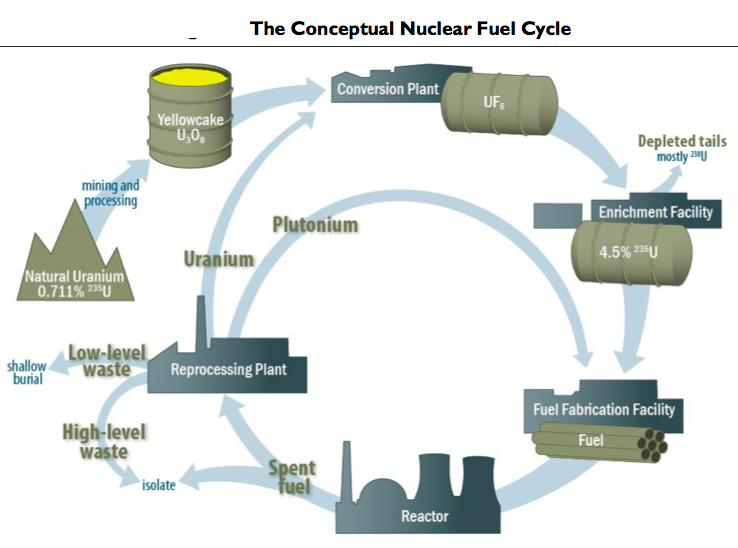
2. The US would have to acknowledge Iran’s right to enrich uranium to 5% for fuel for its reactors. The US itself, France, Japan, Britain, Russia, China, India and some others either already do this or have the proven capacity to do so.
fuelcycle
3. Iran would likely have to give up enriching uranium to 19.5% for its medical reactor, as a good faith measure.
4. The US would have to agree in return to allow at least some Iranian banks to return to the major international banking exchanges. At the least, the president would have to give assurances that he would not order third party sanctions on international banks that dealt with Iran.
5. Iran might have to accept online real-time monitoring of its uranium, both raw and low-enriched, by the IAEA
6. The US would have to agree not to veto steps by the UN Security Council to loosen or remove multilateral sanctions.
7. Iran’s uranium would have to be stored as uranium oxide, which is not as easy quickly to convert into high-enriched uranium.
8. President Obama should enunciate a doctrine that the US would not invade Iran or attempt to overthrow the Iranian regime in the absence of overt Iranian military aggression toward the US or a close US ally. The senate likely would not pass a non-aggression treaty, but a presidential doctrine would have some legal and moral force. This step is important because the Iranian quest for nuclear latency is driven by regime insecurity, given the 1953 US coup against the then elected Iranian government.
9. Iran might have to agree to limit the number of centrifuges it maintains, so as to make the rapid construction of a bomb much more difficult. There is no way for an enrichment program to be prevented completely from being used for bomb-making, but the break-out can be made difficult and time-consuming.
10. The US would have to learn to live with the vague potential of Iranian breakout. But US intelligence, satellite surveillance and the threat of restored severe sanctions could work to forestall any such development. Of course, the Supreme Leader of Iran has forbidden constructing, stockpiling or using nuclear weapons, so that attempting to break out in the absence of a clear and immediate threat to Iran’s survival would not be legitimate in the eyes even of regime loyalists. Ultimately, as well, the US and Israeli nuclear arsenals and sophisticated delivery systems are the real bar to Iran using a nuclear weapon, the likelihood of which is virtually in imaginary numbers territory.
Can a breakthrough be had? I believe so. The sticking points will be the extremists on both sides. In Iran, the Revolutionary Guards and Leader Ali Khamenei think the negotiations are another imperialist US trick, and getting them to sign on the dotted line of an agreement won’t be easy. On the US side, the Israel lobbies and Israel itself will accept nothing less than the mothballing of the whole Iranian enrichment program, which is highly unlikely to happen.
A settlement would therefore have to be one that could be accomplished by Presidents Rouhani and Obama despite the carping of the right wings of their countries.
A lot is at stake. The severity of US unilateral sanctions now reaches the level of a financial blockade on Iran, and blockades are acts of war. An attempt to sanction Iran at these levels over the long term would incur a constant risk of tensions spiraling into war. The US economy was deeply wounded by Iraq; Iran is three times bigger, and another major such quagmire could finish the US off as a superpower.

World’s Top Ten Biggest Wars in History


World’s Top Ten Biggest Wars in History


Ever since the evolution of man-kind, there has always existed this peculiar rage & urgency in our race to prove one’s dominancy upon the other. We all know that in ancient gladiator times power was determined by the size of the army and their ability to win wars, well has it changed that much? We humans seem to be caught in a never-ending war between ourselves whereas the beneficiaries never have done or will do any of the dirty work and just control everything from behind the scenes. The Oxford dictionary describes the act of war as a, ‘’ state of armed conflict between different countries or different groups within a country.’’
The following list is not in a chronological order, instead is sorted from the war with the lowest death toll to the highest. So here, we have the world’s ten biggest bloodiest wars in history.

 10. American Civil War (1861-1865)

american civil war 1 World’s Top Ten Biggest Wars in History
The American Civil War was basically a war fought between the ‘North’ or the ‘Union’ and the South also known as the ‘Confederacy’ formed by the secession of several southern slave states. It was also known as the War Between the States or simply just the Civil War. The war had its roots set on issues of slavery and the extensions of it into the western territories of America. More than 800,000 people were killed in the war.

 9. Soviet War in Afghanistan (1979-1989)

Soviet War Afghanistan12 World’s Top Ten Biggest Wars in History
A decade long war between the Soviet-led Afghan forces and the multi-national insurgent groups called the Mujahedeen; with the death toll of well over a million Afghan civilians and those that were participants in the war. The war although fought only in Afghanistan, billions of dollars were funded by countries like the United States, United Kingdom, Saudi Arabia and a few other.

8. Vietnam War (1955-1975)

vietnam war 02 World’s Top Ten Biggest Wars in History
Also known as the Second-Indochina War and as this period of American involvement in Vietnam made it the American War was basically a sequel to the First Indochina War that was fought between North Vietnam – supported by China and other communist allies and South Vietnam – supported by the United States and other anti-communist allies. Over a million civilians were killed in addition to the hundreds of thousands participants in the war.

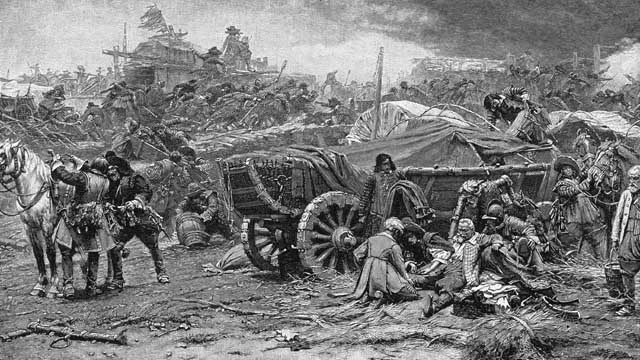
7.  Thirty Year’s War (1618-1648)

thirtyyearswars World’s Top Ten Biggest Wars in History
One of the bloodiest wars on religion, as the name suggests itself a war that lasted over three decades; Thirty Year’s War was one of the longest and the most destructive conflicts in the European history and one of the longest continuous wars in Modern history. Historians have still not come to terms on the fact as to what ignited the fighting; rather there seem to be many parallel causes that fueled the war overtime. It grew as a religious war at first, but then developed into a continuation of the Bourbon-Habsburg rivalry for the European political pre-eminence with the death toll of well above 5 million people.

6. Napoleonic Wars (1803-1815)

napoleonic wars World’s Top Ten Biggest Wars in History
Napoleonic Wars were a series of wars declared against the Napoleon’s French Empire by the opposing coalitions. The war was initially sparked by the French Revolution of 1789 and played out on an unprecedented scale, mainly owing to the application of modern mass conscription. French power was stronger than ever as Napoleon armies had conquered much of Europe but came to an ultimate military defeat after France’s disastrous invasion of Russia in 1812. With over six and a half million people dead the war came to an end resulting in the restoration of the Bourbon-Monarchy in France and the creation of the Concert of Europe.

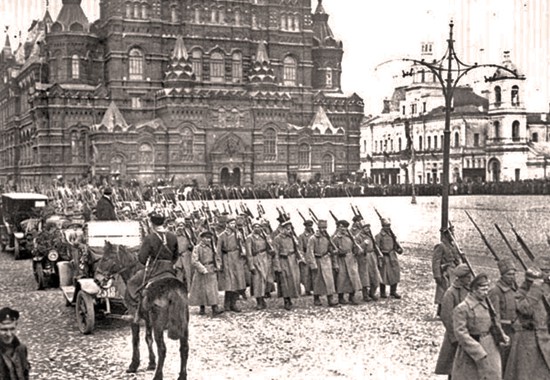
5. Russian Civil War (1917-1922)

civil war russia moscow World’s Top Ten Biggest Wars in History
A war fought between the Bolshevik Red Army and the White Army, the loosely allied anti-Bolshevik forces; in the former Russian Empire was in fact a multi-party war with notably many foreign armies like the Allied Forces and pro-German armies warring against the Red Army. The war lasted only five short years but resulted in the death of over 7 million people all in all.

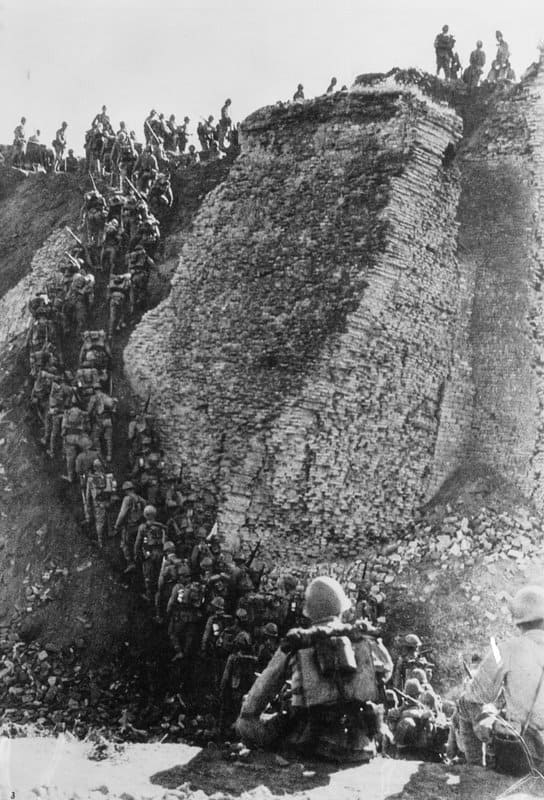
4.  Conquests by the Empire of Japan (1894-1945)

Conquests by the Empire of Japan World’s Top Ten Biggest Wars in History
The Empire of Japan literally means the empire and world power that had existed from the Meiji Restoration that happened on 3rd January 1868 to the enactment of the post World War II Constitution of Japan on 3rd May 1947. Only after suffering a couple defeats and the atomic bombings of Hiroshima and Nagasaki did the Empire of Japan surrendered to the Allies on the 2nd of September, 1945. The American involvement gave birth to a new constitution and was forced on from 3rd May, 1947 officially dissolving the Empire which had already been the cause of over 20 million deaths.

3. World War I (1914-1918)

world war 1 World’s Top Ten Biggest Wars in History
World War I was one of the bloodiest global wars in the history of man-kind centered in Europe that began on 28 July 1914. It was previously called the Great War from its occurrence until the start of the mother of all blood baths in history, World War II. It involved all the great powers in the world, assembled in two opposing alliances the Allies and the Central Powers. The death toll for World War I was estimated to be around a staggering 50 million plus.

2.  Mongol Conquests (1206-1368)

Mongolia empire World’s Top Ten Biggest Wars in History
A war that sparked in the dawn of the 13th century which resulted in the vast expansion of the Mongol Empire that covered much of Asia and Eastern Europe by mid 1300. It is believed by many historians that Mongol raids and invasions were one of the deadliest conflicts in human history up through that period. The Mongols brought terror to Europe on a scale not ever seen again until the twentieth century with more than 60 million killings on their way.

 1.  World War II (1939-1945)

world war 2 World’s Top Ten Biggest Wars in History
Also known as the Second World War, fought between the vast majority of the world’s nations – including all the great powers – eventually forming two opposing military alliances like the First World War; the Allies and the Axis. Marked by mass deaths of civilians, including the Holocaust and the only use of nuclear weapons in warfare up to present, the war resulted in over 70 million fatalities and is believed to be the deadliest, bloodiest war ever in history which shook forever the foundations of our own existence.
Final Conclusion: Although these wars were fought on different territories by various groups and countries on different time periods in history; the ones who always suffered and lost were the same innocent civilians. Never in the field of human conflict was so much owed by so many to so few, like in these pointless wars for blinding power. Albert Einstein was once asked by a reporter after the World War II had ended, ‘’Sir what type of machinery and weapons do you think will be used in the World War III?’’ He answered with a smile, ‘’I don’t know about the World War III but if there is a World War IV, then it will surely be fought with sticks and stones.


THE ISLAMIST CHALLENGE IN WEST ASIA: DOCTRINAL POLITICAL COMPETITIONS AFTER THE ARAB SPRING

Pentagon Press;
135 pages; Rs 695

After a little-known Islamic jihadi group attacked the twin symbols of US power, the World Trade Center, on September 11, 2001, the US retaliated by unleashing a "war on terror" on the self-appointed anti-West jihadist Osama Bin Laden, the Saudi Arabian who shifted his headquarters to Afghanistan and then Pakistan where the Americans found and killed him. A war, whether on "terror" or by one nation against another, must be directed against a well-defined and -identified enemy. Unfortunately, the war against scattered and anarchic Islamist fundamentalist groups like the Al Qaeda, Taliban, Lashkar-e-Toiba, or the Indian Mujahideen somehow came to be identified with Islamic Arab and Afro-Arab countries. These countries, thus, became the "symbols of evil", the dreamlands of pristine Islam based on the Holy Quran and Sharia as practised by the first five Caliphs, as envisaged by these fundamentalist groups.

This conflation was the basis of American scholar Samuel Huntington's famous "clash of civilisations" theory, which posited a war between the Christian West and Islamic societies. As a result, Islam versus Others became the central agenda of the 21st century. But the Arab Spring that began in December 2010 across the Arab and north African Islamic world has shaken that certainty. This is a war within, in which a secular, democratic, liberal Arab intelligentsia has sought liberation from offensive regimes and their patrons, western countries greedy for Arab oil and other natural resources. The wheel of history has turned, and movements like the Muslim Brotherhood in Egypt and Al Qaeda and Taliban in Afghanistan, Pakistan, Syria and so on, are under scrutiny within the countries that spawned them. The moving force behind anti-authoritarian Arab regimes are the frustrated youth of these countries searching for secular solutions, on the basis of democratic elections, to economic development and opportunity. The goal of establishing a "puritanical" Islamic state system is being rigorously questioned throughout the region.

It is this "war within" that author Talmiz Ahmad has assessed. It is based on his study of the historical evolution of doctrinal Islam combined with his experience of living in these countries as a diplomat. In the first four of the 10 chapters of this book, Ahmad has provided a rich background of Islam's internal debates in which he encapsulates the actual, living reality of highly differentiated Islam. A clear message from these four background chapters is that the Arab Islamic world is convulsed by, to use V S Naipaul's term, "a million mutinies" among liberal theologians and gun-wielding groups claiming to be custodians of "pure Islam". As he writes, "Over the last two years of the Arab Spring, the West Asia-North Africa (WANA) region has been witnessing an interplay between national and regional political scenarios in an environment of robust competition and even conflict."

Is the principal competition between the different streams of Islam, as Western commentators suggest? Ahmad provides some answers in chapters 5 to 7 that cover: (a) the Arab Spring and its aftermath; (b) proliferation of radical Islam; and (c) Islamist politics: competition, conflict and prognosis. These chapters catalogue the real story of the movements, challenges, setbacks and reverses of the actors involved in various countries. A stark fact that emerges from Ahmad's assessment as well as that of many other objective scholars of the turmoil within Islamic societies is that the self-appointed custodians of so-called puritan Islam are engaged in imposing a poor, brutish, bloody and violent society in which everyone who opposes them is considered a "non-believer" or infidel. For instance, powerful Jihadi-Salafi groups in Libya not only challenged the Americans and Colonel Gaddafi, "these Libyan radicals have attacked Sufi monasteries and tombs of saints, without any intervention of local authorities".

It is a war within Islam but also with the outside world, and the author has appropriately devoted Chapter 8 to "Regional Islamist Confrontations" because the whole region has always been a focus of powerful Western states and multinational corporations, and the Arabs are involved in interrelated and interdependent external and domestic conflicts.

The author raises the big question in the last chapter on institutionalising Sharia and democracy. Can there be democracy and an elected legislative to enact laws for society in a puritanical Islamist state where God is sovereign, God is Law, and Sharia is the ultimate source of legal and moral foundations of the regime? These remain open-ended questions for every society faced with the challenge of religious-based politics - whether Islamic or Hindutva-driven - because modern democracy cannot co-exist with doctrinal, faith-based, "authentic" puritanical regimes.

The author is correct when he says the Arab Spring remains a "work-in-progress" because the process of change and challenge has only just begun. The turmoil in Islamic societies today is a result of common people's search for an "alternative" politics to the existing authoritarian military state system. At the same time, it is also true that the historical symbols of Islam do provide escapism from the realities of today. Those dichotomies are still to be reconciled.