Tuesday, 29 October 2013

IS THE GREAT WAR WAS A JUST WAAR????

The Great War was a Just War

By Gary Sheffield | Published in History Today Volume: 63 Issue: 8 2013 
   
First World War 
It is time to ditch the Blackadder view of history, says Gary Sheffield. Britain was right to fight Imperial Germany in 1914.
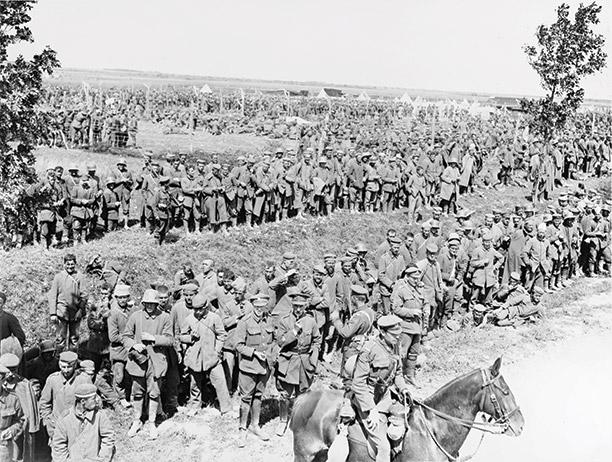
The end in sight: British troops round up German prisoners after the Battle of Amiens, August 9th, 1918The end in sight: British troops round up German prisoners after the Battle of Amiens, August 9th, 1918‘At that point in Britain’s history, it was important that there was a war that ensured that Europe could continue to be a set of countries which were strong and which could be working together.’ Such was the view of Maria Miller, the culture secretary, on why the First World War was fought, given on BBC Radio 4’s flagship Today programme on June 10th, 2013. Her comments were greeted with a range of responses, in which mockery was to the fore. One of the more considered was that of the journalist Andy McSmith in the Independent: ‘Oh dear!’ McSmith exclaimed. Because the UK Government ‘wants to honour those who died in the conflict without making a judgment on why that war began’, he continued, Miller, who heads the department taking the lead on the centenary commemorations of the First World War, ‘had to improvise when asked what it was all about’.
McSmith’s insight is astute. It was the government’s ‘non-judgmental’ approach that led to the culture secretary’s moment of car-crash radio. She was responding to the journalist and historian Max Hastings, who had stated that most historians held Germany and Austria-Hungary primarily responsible for the outbreak of the First World War. While recently there has been an attempt to spread the blame, particularly by pinning responsibility on Russia, this indeed remains the mainstream position among serious historians. In the debate over war guilt, what happened next is often ignored. However the conflict started, Germany took full advantage to carry out a war of conquest and aggression. Britain’s First World War was a war of national survival, a defensive conflict fought at huge cost against an aggressive enemy bent on achieving hegemony in Europe.
As it stands, the Government’s position of neutrality regarding the meaning of the war denies the commemorations the context necessary to make sense of them. The UK’s leading historian of the First World War, Professor Sir Hew Strachan, who is a member of the Government’s own advisory committee, early on described official plans for the commemoration as ‘conceptually empty’. Strachan’s criticisms remain valid. The Government has explicitly disavowed trying to create any particular ‘narrative’, but by refusing to set the commemorations into the context of the origins of the war and the aggression of the Central Powers, this is exactly what it has done. Merely commemorating the sacrifice of British troops without explaining why they died tacitly gives support to the dominant popular view that the war was futile and the deaths meaningless. So does the fact that the original programme of official commemorations included defeats such as Gallipoli and the First Day on the Somme, but omitted the great victories of 1918 that won the war, such as Amiens and the breaking of the Hindenburg Line. The assurance given in June 2013 by both the Ministry of Defence and the Department of Culture, Media and Sport that the Battle of Amiens would be appropriately commemorated on its centenary in August 2018 is greatly to be welcomed.
The reason for the Government’s squeamishness has been blamed on what might be termed the Basil Fawlty/Noël Coward approach – ‘don’t mention the war/let’s not be beastly to the Germans’ – but concern at domestic reaction is probably more important. In 1994 and 2004, the time of the 50th and 60th anniversaries of D-Day, Conservative and Labour governments had no problem in blaming Nazi Germany for the Second World War or in celebrating the defence of democracy. But it seems the First World War is different. It is hard to overestimate the extent to which the idea of the war being ‘futile’ and the battles meaningless bloodbaths conducted by callous and criminally incompetent generals is (to use an appropriate word) ‘entrenched’. In a two-decade career as a public historian, putting forward alternative views on television, radio and in the press, I have become well aware that daring to suggest that Blackadder Goes Forth is not actually a documentary brings forth paroxysms of anger. I therefore have some sympathy for politicians who do not want to offend members of the electorate: after all, they want to be re-elected. Dr Andrew Murrison, MP, the prime minister’s lead for the centenary commemorations, deserves great credit for breaking ranks to state that for the British the war was just.
There is much in the Government’s commemoration plans that should be applauded, but I cannot approve of the decision, for political reasons, to take the path of least resistance by maintaining its non-judgmental stance. No one wants to see five years of German-bashing, but we run the risk of missing a (literally) once in a century opportunity to educate the public about the war. For the government to show leadership by showcasing the wealth of scholarly research that undermines the Blackadder view might be politically risky, but it is the right thing to do.
Professor Gary Sheffield takes up the Chair of War Studies at the University of Wolverhampton in September 2013. He is the author of The Chief: Douglas Haig and the British Army (Aurum, 2011).

Steps OF STOPPING WAR....

Steps OF STOPPING WAR....

  1. 1
    Start a petition. Open a word document, and make a page with the headline, "STOP WAR" with a little bit explaining what you believe in. Then insert numbers with lines long enough for names. Print out a lot of lines, because a lot of people will most likely sign it.
  2. 2
    Make signs. You can make them as a big banner, or as picket signs to carry around. No matter how it looks, just make sure it gets the point across. Don't paint the words in yellow, because people won't be able to see this while driving past. Paint it in a dark colour, such as black or red. Paint something meaningful on it that will cause people to want to sign your petition, such as, "People are dying. You can stop it". This will make people feel guilty for not doing anything, and they will proudly sign the petition to help the cause. Don't write something like, "End war or we'll hurt you", because this is against what your belief is stating.
  3. 3
    Gather followers. The sad truth is: if no one believes in what you're doing, no one is going to help you. The easiest thing to do is to get most of your friends to sign your petition, then acquaintances, and then strangers. If a stranger sees your petition with only two people on it, they will see it as a non-dedicated source. If they see a petition with a thousand signatures, they'll take it more seriously.
  4. The more the followers, the bigger amount of space.
    4
    Protest. Go to a place that is crowded, such as the park on a nice day. Set yourself up at a nice table along with some others who support the cause, and say things loudly like, "People are dying! Only you can stop it!", or, "Anti-War, Pro-Peace!". These things are likely to catch others' attention. If someone comes over, ask them to sign your petition.
  5. 5
    Vote for the anti-war candidate. Take action by voting for the anti-war candidate, and encourage others to do so also. You can encourage your friends to vote for the anti-war runner, but this isn't a good idea for strangers, because they won't appreciate you telling them what to do. Asking people to sign a petition is okay, but telling them who to vote for and informing them of the candidate will seem more like a campaign. Try to remain personal when asking people to help the cause, and stick to little things they can do.
  6. A pamphlet this size would be good
    6
    Inform others. Surprisingly, many are unaware of the effects of war. You can help end this by either going door to door and informing, or printing out information packets and putting them in peoples' mailboxes. However, some people get annoyed by this and simply throw the packets away. An alternative to this is to walk around a park, and asking people if they'd like an information packet on the affects of war and what they can do to stop it. This way, you won't waste your time informing people who don't care.
  7. 7
    Show that you support the cause. There are several ways to do this. Let your creativity inspire you. You can make T-shirts, paint your car with anti-war symbols, or host things like concerts, and donate a portion of the money to bring the armies home. People will admire you for your courage and devotion to a cause, and may even join you in your quest. A good idea is to make anti-war bumper stickers, and hand them out at a crowded place. All of these ideas show you are serious about a cause, and will encourage others to join you.

FUKUSHIMA NUCLEAR PLANT

More Than 100,000 Call For World Community To Take Charge Of Crippled Fukushima Nuclear Plant

The Huffington Post  |  By Posted:   |  Updated: 10/25/2013 5:48 pm EDT
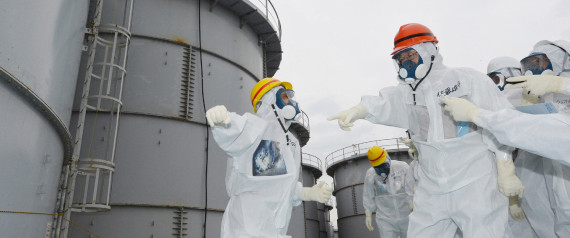
WASHINGTON -- A MoveOn.org petition penned by anti-nuclear activist Harvey Wasserman is asking the United Nations to intervene at the crippled Fukushima nuclear facility in Japan.
A 7.3 magnitude earthquake struck off the coast of Japan on Friday, prompting a fresh round of tsunami warnings at the nuclear site, which was ravaged in 2011 after an earthquake and tsunami caused flooding that led to a partial meltdown at the Fukushima Daiichi power plant, leaving behind millions of gallons of radioactive water.
"At Fukushima Unit 4, the impending removal of hugely radioactive spent fuel rods from a pool 100 feet in the air presents unparalleled scientific and engineering challenges," the petition reads. "With the potential for 15,000 times more fallout than was released at Hiroshima, we ask the world community, through the United Nations, to take control of this uniquely perilous task."
More than 100,000 people had signed the petition as of Friday afternoon. It's slated for delivery to U.N. Secretary General Ban Ki-Moon and President Barack Obama in early November.

Stop Funding War

Stop Funding War


Global Exchange’s Peace Program, including sister organization CODEPINK, inspires creative actions to expose the real cost of war at home and abroad, challenge war profiteering and military recruitment, and build people-to-people ties to expand understanding and tolerance. We continue to be a vital voice of protest and conscience.
War is costly—in terms of lives and dollars, and the media is saturated with propaganda and lies about war. Through op-eds, press releases and articles, we are exposing the true cost of war, and are working to provide peaceful alternatives. We are calling for an end to the billions spent on war and demanding that these precious dollars go to support real needs here at home and around the world. We refuse to stand quietly by as unemployment rises, the economy collapses and states are on the verge of bankruptcy

10 Things You Can Do to Prevent War

10 Things You Can Do to Prevent War

Preventing war can be a citizen activity! Read how you can participate in the growing anti-war movement.
 
1. Educate yourself on the issues.
To stop terror and avoid war, we must first understand what causes it, and what approaches have, and haven't, been successful in the past. So far, America's "War On Terrorism" seems to be focused exclusively on the movement that has apparently spawned the perpetrators of the Sept. 11 attacks: radical, violent fringe conservative Sunni Muslims, from an area that stretches geographically from Northwest Africa to Southeast Asia. It can only help if we learn more about the history, culture, religions and economies of those parts of the world; the West's historic and current religious, military, political and economic relationships with them and with Islam; and how those conditions, from colonialism through global economic changes and geopolitical rivalies, have contributed to poverty, desperation, hatred and, at times, religious fanaticism today. Part of how we've gotten here is the West's tendency to impose our own cultures, values and expectations on these regions without taking the time to understand where the people we're dealing with are coming from. People interested in stopping terror and avoiding war cannot afford to repeat that mistake.
2. Develop a closer, more respectful relationship to Muslims and the Islamic world.
As the world shrinks, this is actually something we should be doing with all cultures and religions, but for the purposes of our current War on Terrorism, it is particularly important that, much as Christianity and Judaism have learned to live in greater harmony after two millenia of tension, Western cultures and religions must find and develop our common interests with the Islamic world. Just as with any minority or "other," the more we each work with and understand people of the Islamic faith, the less they will seem strange and threatening and the more we will recognize each other as individuals and as human beings.
3. Communicate!
Don't be afraid to speak out, and to listen: talk with your neighbors, your friends, relatives, co-workers, classmates. Learn from the people you disagree with, but don't shy away from voicing your opinions in places where they're unpopular. Call in to radio and television talk shows. Write letters to the editor and opinion articles for your local community newspapers. Visit their editorial boards.
4. Take your case to the community.
Set up community forums, teach-ins and panels, to educate the public, to air out differing opinions and to force politicians to go on the record with their beliefs. Table at community events. Write and circulate flyers, with information on the issue, lobbying and contact information, publicizing events or putting out powerful graphic images. Circulate petitions that you can then use both to notify people of future events (and to recruit volunteers to help organize them!) and to lobby elected officials or other prominent community figures. Take out ads in your local newspapers. Make your advocacy visible, so people will think -- even if local media is hostile -- that your cause is popular and widespread. Set up and publicize your own web site or list-serve.
5. Raise money for the Third World.
Rather than collecting money for survivors' families or to rebuild the World Trade Center, send it where it's more desperately needed: to the countries whose crushing poverty helps spawn terrorism. A more economically just world will be one with less terror. Donate your own money, or organize events where your whole community can pitch in and help: benefits, readings, raffles, auctions, walk-a-thons and so forth. Consider working jointly with a local mosque or Third World community center.
6. Publicize and oppose racial profiling, the curbing of civil liberties and the backlash against immigrants.
This is both a local and a national issue, involving everything from new INS and Justice Department programs and regulations to local police behavior and cases of isolated bigotry. While this is in many ways a separate issue, bear in mind that it's easier for our government to pursue an irresponsible or counter-productive military-oriented solution if more of the public hates and fears people who look like the enemy. When civil liberties are taken away in an emergency, they're rarely restored afterwards; and when a precedent is set whereby constitutional rights can be denied to any one group, you could be next.
7. Lobby for Congress and the White House to pursue policies that minimize civilian deaths; rethink our national defense and foreign policy priorities; and change global economic institutions and trade agreements so that they create less, not more, poverty and death.
Send a letter (preferably handwritten) or card, make a phone call (faxes and emails are less effective, but better than nothing), go to the forums of public officials, visit their offices. Much of our ability to minimize future terrorist activity depends not just on better security at home, but policies abroad that work consistently to promote the ideals of freedom and democracy America stands for. Powerful special interests often keep the White House and Congress from doing the right thing; it's up to us, the public, to require that when they act in our name, they treat others the way we would want to be treated. We, the public, are the people whose lives are on the line in this conflict; we have a right to demand that the people acting for us make our safety a priority, and not put us in further jeopardy by making matters worse.
8. Participate in or create visible public events for the same goals.
It's not enough to send a letter. To create the public momentum to convince an elected official to do something s/he might think isn't in his personal best interest, s/he has to think it's the right thing to do and that a lot of people agree with them. Attend or organize vigils, rallies, marches, parades, art festivals, music events, nonviolent direct actions or civil disobedience. Be creative, have fun, be visible, get the word out.
9. Work the media, or be the media.
Send out press releases, talk with reporters and editors, make sure when you're doing public events that local media outlets know about it, and offer something they'll want to cover. Train yourself to give interviews and be articulate. Start your own newsletter or radio or cable access TV show, or contribute to others. Support independent media that's willing to provide critical information and alternative viewpoints not as easily available in big mainstream outlets.
10. Reclaim patriotism!
We all want the most effective possible course for stopping terrorism. Disagreeing with our government's proposed strategies isn't treason -- it's the highest form of citizenship in a participatory democracy. We're becoming activists on this issue because we love our country, as well as our community and the world. Don't let anybody claim that you're "blaming America" or "betraying the President." We're proud to live in a country where we have the right, and the obligation, to speak out when our government is wrong. We're speaking out because we care. Unthinking obedience is the point at which our democracy has broken down.

THE HACKERS HAVE BEEN HACKED???????

British Hacker Lauri Love Charged With Breaking Into Nasa And US Army

PA/Huffington Post UK  |  Posted:   |  Updated: 28/10/2013 16:10 GMT
A British hacker has been charged with breaking into the computer systems of the US army, Nasa and other federal agencies.
The 28-year-old, named as Lauri Love from Suffolk, was arrested by officers from the National Crime Agency (NCA) under the Computer Misuse Act (CMA). He has been released on police bail until next February.
NCA spokesman Andy Archibald said: "This arrest is the culmination of close joint working by the NCA, Police Scotland and our international partners.
"Cyber-criminals should be aware that no matter where in the world you commit cyber crime, even from remote places, you can and will be identified and held accountable for your actions.
"The NCA has well-developed law enforcement alliances globally and we will pursue and deal robustly with cyber-criminals."
Under the CMA, individuals can be arrested for launching attacks from within the UK against computers anywhere in the world.
Love is believed to have lived in the Stradishall and Lowestoft areas.

CRISIS IN THE GREAT LAKES 2

How DR Congo conflict could ignite regional war

E-mail Print PDF
The likely implications of Ntaganda's flight
On Monday March 18, former leader of the Congolese rebel movement CNDP, Gen. Bosco Ntaganda, appeared unexpectedly at the United States embassy in Kigali to hand himself over to the Americans. He was smarting from a military defeat at the hands his erstwhile ally and now rival, Sultan Makenga, who heads the M23 rebel movement in eastern DRC.
After walking through Virunga National Park that covers the border areas of Congo, Rwanda and Uganda, he drove to Kigali most likely from Ruhengeri unnoticed by Rwanda’s security forces. Rwandan officials were taken by surprised when they heard from the Americans about Ntaganda’s appearance in their capital seeking extradition to The Hague where he is wanted for war crimes.
The previous day, March 17, the ramp of Ntaganda’s defeated army had entered Rwanda seeking refugee alongside their political leader Jean Marie Runiga. Rwanda placed Runiga under house arrest as it prepared to hand over the 700 combatants with him over to the UN as refugees.

The recent flare-up in the fighting in Congo has taken the international community by surprise as well. For more than a year, the international community bought tall tales by the UN “panel of experts” that there was no rebellion in Congo but a Rwandan invasion of the country. The M23 was seen as a Rwanda proxy and American and European journalists wrote stories of how its troops were actually from the Rwandan army. Thus, when M23 broke into rival factions and began a ferocious internal fight, the international media went speechless. They could not reasonably claim that this was a fight among different battalions of the Rwandan army.
Regional confusion
The internal fighting within M23 has also thrown the regional efforts to end that conflict in confusion. At the beginning of March, Presidents Joseph Kabila of the Democratic Republic of Congo, Eduardo Dos Santos of Angola and Jacob Zuma of South Africa had a meeting in Luanda, Angola. During the meeting, Zuma and Kabila argued that SADC should move its forces to fight the M23 rebels. Zuma, sources say, is convinced that M23 is the disguised hand of Rwanda. But Dos Santos objected saying that he knows the problem of DRC is more than Rwanda and M23. It has a lot to do with internal problems in Congo.
“Comrades,” Dos Santos reportedly told his colleagues, “even us [Angola] have many problems emanating from DRC. Many guns are being trafficked from DRC into our country. Criminals and potential terrorists are crossing as well. So it would be wrong to say that the M23 problem is caused by Rwanda. Kigali may have contributed to it but it is not the source of the problem. The root cause is the inability of Kinshasa to govern most of its territory.”
Dos Santos advised that rather than send forces to fight rebels inside DRC, SADC should help Kinshasa find a negotiated settlement with them – “in order to achieve internal social integration.” He said Luanda has been deeply involved in the problems of Congo for nearly 40 years and most of this time as a victim. This time, he added, Angola will not contribute troops to fight Kinshasa’s wars – a solution he said cannot work.
“But if you comrades feel strongly that we intervene militarily we must,” he added perhaps sensing unease on their faces, “then in the spirit of SADC Angola will contribute money but not troops to that effort. And I would advise that all of us help our young brother here find a political, not a military solution.”
Sources close to Luanda say that Dos Santos held his position firmly even in the face of pressure from Zuma as Kabila watched in silent wonderment. Finally, and in spite of his advice, SADC went ahead to recommend deployment of troops inside DRC to fight “wrong elements” (read M23). The countries to contribute to this force are South Africa, Tanzania and Mozambique. This is a potentially explosive decision.
Presidents Zuma and Jakaya Kikwete of Tanzania, informed sources say, do not see eye-to eye with President Paul Kagame of Rwanda on DRC. Kikwete’s vision is reportedly blurred by internal failures of his government. Under him, Tanzania has seen unprecedented corruption and failure to deliver basic services to the people. The situation is not helped when he is constantly reminded of Kagame’s success in the little neighbor, Rwanda.
Zuma and Kagame’s relations meanwhile are not good either. First, the South African president has been under the influence of Bill Masetera, a former intelligence chief under Thabo Mbeki and close friend and ally of Rwandan dissident generals Kayumba Nyamwasa and Patrick Karegyeya. To make matters worse, in a meeting of AU in Addis Ababa in 2011, Kagame is said to have directly interrupted Zuma’s speech in defense of then Libyan leader Muammar Gadaffi by saying he had seen “money bags been moving around” to pay off various heads of state to support Gadaffi. Zuma did not take this accusation lightly and it added insult to injury.
It is in this context that two of the three countries sending troops to DRC have an axe to grind with the country accused of sponsoring a rebellion. Regional military experts say that the South African army may be good in equipment and training but is weak in experience. This is even more pronounced when it comes to fighting a counter insurgency in a country that is densely forested, with a bad terrain, and speaking a language alien to the South Africans. The Tanzanian army, on the other hand, while well trained but not-so-well equipped has not seen action in 30 years. Secondly, the TPDF has never fought a counter insurgency.
“The South Africans and Tanzanians are preparing to deploy in DRC with a lot of enthusiasm and confidence of success against M23,” a well placed regional expert on regional security told The Independent on condition of anonymity, “But they are underestimating the capabilities of M23. These people have been fighting in the jungles of eastern DRC for over 18 years and know every nook and cranny of their area. They have also accumulated considerable experience. So, mark my words: They are not going to be a walkover as the South Africans and Tanzanians would like the think.”
Therefore, experts say that the likelihood that the Tanzanians and South Africans may get badly clobbered by M23 is very high. And if this happens: then what?
“It is very possible the Tanzanians and South Africans will not believe that they have been beaten by M23,” the expert told The Independent, “They are likely to suspect it is Rwanda fighting them. And if this is the case, and depending on the level of humiliation that may be inflicted on them, they, especially Tanzania, may decide to attack Rwanda in retaliation. Then you will have an international war – the unexpected outcome of an ill-thought out intervention in Congo.”
Internal M23 fight
Or may be not. For the last two weeks as the armies of Mozambique, South Africa and Tanzania trained and prepared to deploy in DRC, M23 began a ferocious internal war against itself. The forces of Makenga began pitched battles with the forces commanded by Ntaganda.
In the murky jungles of rebel infested DRC, it should not surprise anyone that Ntaganda is resurfacing at this point. Informed sources say, Runiga, has in fact been an Ntaganda stooge all along.
M23 has for long had factions. Although M23 officially claimed that they had nothing to do with Ntaganda, he left behind a wing, also known as the Kimbelembele that paid allegiance to him led General Baudouin Ngaruye. These were always in constant but invisible friction with the the pro-Nkunda wing, the Kifuafua led by Sultani Makenga.
Sources on the ground say the intra-M23 battles have been ferocious, brutal and bloody – worse in their sheer mercilessness compared to anything Congolese have seen in battles against Kinshasa – a family feud turned nasty.
Last week, Ntaganda matched his forces from Runyoni and attacked Makenga’s camp at Cyanzu. He also attacked Makenga’s troops in Rumangabo where the main M23 armories are. This forced Makenga to call upon two of his forward battalions north of Goma in the area of Kirimanyoka to come and reinforce Rumangabo. He also called his forces based around Rucuru to come reinforce Cyanzu. This withdraw by these battalions from these towns led the FDLR, the forces of the former Rwandan army that committed genocide in 1994, to occupy all the areas near Rucuru and Rugari. The FDLR in the presence of MUNSCO later handed over Rucuru and Kiwanja to the Congolese army.
However, having repelled the Ntaganda attack, Makenga now moved his forces and encircled Rucuru until he forced them to withdraw before he could annihilate them.  The Congolese obliged – showing that even when M23 is fighting itself, the Congolese army is unable to take advantage of the situation and make counter offensives that can stand.
The new developments have thrown the international community, its activist arm led by human rights organizations, and its propaganda arm led by the international press, into disarray. For a long time, the international community refused to recognise M23 as a domestic Congolese problem with grievances against Kinshasa. Instead, they insisted M23 was actually the Rwandan army itself. Tall tales of large movements of troops crossing the border from Rwanda into DRC were relayed to the world. Added to this were allegations that large quantities of arms and ammunition were being transported from Kigali to Goma to support the operation.
Shock and shame
A report by a UN “panel of experts” that many informed people saw as little more than a shoddy and poorly written work of fiction was given Biblical status.
The belief that M23 was the hidden work of Kigali was so widespread that obvious facts were ignored. Even when Kabila fired his chief of staff for selling arms to the rebels, the human rights community and its propaganda arm, the international press, refused to report the matter as it would have undermined the credibility of their claim that it was the Rwandan army fighting in DRC and supplying itself the weapons. So powerful was the desire to find Rwanda guilty that nearly every international donor began cutting aid to Rwanda.
The fighting among the different factions of the M23 has taken the entire UN system, its human rights allies and the international press by shock and surprise. Without Rwanda to play the role of villain, the triumvirate is now confused. With tens of thousands getting displaced, thousands of refugees flocking into Rwanda, Uganda and Burundi, with hundreds dead anddying, there is only a murmur in the international press about the evolving humanitarian crisis in eastern DRC. The problem is that the international community has no one to blame this time.
Informed sources say the current feud within the ranks of M23 is both unfortunate and sad given that Tutsi citizens of DRC face an existential threat from Kinshasa. The leaders of Congo have been openly calling upon different communities in the eastern region to exterminate all Tutsi in that region. Therefore, M23 emerged with strong and legitimate grievances, which the international community through the UN sought to suppress by shifting the blame from Kinshasa to Kigali.
However, from the beginning, this newspaper reported that Kigali was anxious and uncomfortable with M23. Although it shared their legitimate fears, strategists in Kigali felt that Congolese Tutsi are too undisciplined to work with. Sources close to Kagame have always said the president thinks the leadership of Kinshasa and the rebels are all ideologically bankrupt. He has also said this in an open address to the Rwandan parliament. Given his strong views on this matter, it was unlikely that Kagame was the man to throw in his lot with M23.
Besides, Rwanda is aware that although it can influence M23, it does not have control over it. For example, one of the factors behind the current infighting in the rebel group is clan politics and rivalries. Ntaganda is from the Bagogwe clan alongside Baudouin Ngaruye. Meanwhile Makenga is also from the same Bagogwe clan but grew up in Rucuru among Banyejomba clan of former CNDP leader, Laurent Nkunda. Ntaganda has always seen himself as a rival to Nkunda and enjoys large support among the Bagogwe. This meant that Makenga could never rival him for support in the clan which made him court the Banyejomba. Ntaganda has since used his identity to wrestle control from Makenga.
Signs of that M23 would have a fight have always been there. Makenga and Ntaganda have never been friends. When Makenga began M23, he made it clear he had no intention to protect Ntaganda from the International Criminal Court in The Hague. In fact, at the time M23 was formed, Ntaganda who had moved through the Virunga Park was close to Makenga forces. They ignored him. Knowledgeable sources say that among Makenga’s troops were many officers and soldiers who had previously been under Ntaganda’s command and therefore loyal to him. Makenga needed time to consolidate his position.
However, the turning point in M23 came when Runiga became president of the movement. His first action was to negotiate an alliance with Ntaganda. Sources say that Runiga, who is not a Congolese Rwandese but a Mushi, saw that Ntaganda had a following among the M23 troops and had a lot of money and is backed by a strong clan. Makenga, on the other hand, had made Runiga president because as a Mushi and a bishop, he had the stature and following that would expand the political base and appeal of M23 among other Congolese communities. He is well spoken, educated and therefore presentable.
However, when M23 took Goma, the region asked him to leave. In fact Museveni invited Makenga to Kampala where he formally told him that if he needs help from the regional leaders to present his grievances, he needs to withdraw from Goma. Makenga agreed. However, Runiga did not want to leave Goma because he thought it was giving them great political leverage. He called a press conference and put forth a set of political conditions before they could withdraw. He had not consulted Makenga who interpreted it as the hidden voice of Ntaganda.
This was the first and major disagreement between Runiga and Makenga. Runiga was now challenging Makenga claiming he was the supreme political leader. He also promoted Col. Baudoin Ngaruye (now in a refugee camp in Giseyi) to Brigadier General – the same rank as Makenga. Nyaruye is very close to Ntaganda. Makenga saw this as Ntaganda taking over M23.
When Makenga returned from Kampala, he wanted to arrest Runiga. However, after a lot of political negotiations he abandoned the idea. But the battle-lines had been drawn and it was only time before the two sides would flex muscles in eastern Congo.
The specific point of departure between Runiga and Makenga emerged from the direction of  negotiations in Kampala.
Makenga, sources say, felt the negotiations should be narrowed down to focus on breaches of the 2009 agreement that led to the M23 rebellion. He focused on ethnic persecution and attracted other ethnic groups to his agenda.
Runiga, as a politician wanted to broaden the demands to governance. He saw that the broader platform would attract more support among non-Rwandan Congolese who feel oppressed by Kinshasa.
These inter and intra clan and factional rivalries meant that Rwanda could not actively support any of the groups in eastern Congo except at the price of being dragged into what was potential chaos.
Courting Museveni
Therefore, from the beginning of this conflict, and if the international community was genuinely committed to solving the problems of DRC, it needed Rwanda’s aid. However, ignorance and prejudice combined with self-interest to push the international community into isolating Rwanda. Without Kigali to cajole and threaten M23, the Tutsi insurgents in DRC were a time bomb.
Meanwhile Kinshasa was always only happy to find an international scapegoat for its own internal failures and Rwanda was a perfect one. However, Kinshasa knew all too well the domestic dynamics – and therefore Kabila kept direct personal contact with both Ntaganda and Makenga, calling each one of them by phone regularly.
Sources say that through this interaction, Kabila was able to skillfully exploit historical animosities between the two men and their clans – trying to woo both by bad mouthing the other. Congolese intelligence may be corrupt and incompetent in almost everything under the sun but it is efficient in one thing – spreading rumours. Thus, sources say, Congolese intelligence led each side (Makenga and Ntaganda) to believe that the other was working with Kinshasa to clinch a deal behind the other’s back. This increased internal suspicions, which fed into historical clan rivalries. However, what Congo lacks in military and political capacity it may achieve in diplomacy.
Since 2011, when relations between Uganda and Rwanda significantly improved significantly, President Museveni and Kagame have been viewed as natural allies. Museveni is the lead mediator on the conflict in Congo. As new alliances are forged, it appears Rwanda’s enemies might want isolate Kagame even from Museveni.
There is a risk if some parties play on their previous animosities to draw the two leaders apart by taking positions that may favour Kampala but hurt Kigali.
When Museveni lost his father, Kagame was expected to fly to Uganda for the funeral. He did not and sent condolences sparking speculation.
Meanwhile, Kikwete flew directly from Addis Ababa to Rwakitura to attend the funeral. Later Kabila flew from Addis Ababa as well to Kinshasa before flying to Rwakitura to lay a wreath on Mzee Amos’ Kaguta’s grave, apparently, sources claim, on the instigation of Kikwete. In the end, observers say, the big security picture in the region could be decided by small matters such as these.
- See more at: http://www.independent.co.ug/cover-story/7583-how-dr-congo-conflict-could-ignite-regional-war#sthash.rDWxEUMp.dpuf

CRISIS IN THE GREAT LAKES 2:

 Is Tanzania South Africa’s Trojan Horse? And Why Did Mandela Like Kagame But Zuma Doesn’t?

THE TWISTS AND TURNS  in the story of how Rwanda, Tanzania and Uganda have tangled and untangled over the last 35 years to create both the current face-off between Kigali and Dar es Salaam, and the crisis in eastern Democratic Republic of Congo today as reported in CRISIS IN THE GREAT LAKES 1: For Rwanda Its Back To 1996…And For Tanzania Its Back To Uganda 1982 were only beginning.
Presidents Julius Nyerere, Milton Obote, and Jomo Kenyatta during the good days of the EAC (I) in the late 1960s. Today the sins of the Founding Fathers haunt their political children.
We need to look south for a moment. In 1994 Nelson Mandela became president of a free and democratic South Africa, and the African National Congress (ANC) took power.
In the many years before Mozambique gained independence from the Portuguese in 1974 after a long liberation war, the armed wing of ANC, Umkhonto we Sizwe (“Spear of the Nation”), like several other Southern African resistance movements, was based in Tanzania. Tanzania paid a dear price in endless raids by the apartheid airforce, which was far superior to anything any African country then could throw at it.
The  apartheid South African raids, many of them in Tanzania’s fertile south, combined with Nyerere’s socialist policies, to keep the country poor. That though, did not diminish Tanzania’s generosity or commitment to southern African liberation.
That long sacrifice forged a blood link with southern Africa (expressed today in Tanzania’s membership of the Southern Africa Development Community [SADC]).
That is why the accusation that Tanzania is more committed to SADC than the five-member East African Community (EAC) is a little naïve and ignores history. Asking it to choose between the two is to demand that it walk away from itself.
Indeed the EAC could be said to a greater source of pain and betrayal to Tanzania than SADC. To appreciate this, it requires that we go back to 1974. At that time, Uganda’s Milton Obote, a close friend of Nyerere, was living in exile in Dar es Salaam. Uganda military dictator Idi Amin’s quarrels with Nyerere was reaching ridiculous levels. Not only did Amin, a former boxing champion, demand that he and Nyerere should enter a ring and fight to sort out their differences, but he also said if Nyerere were a woman, he would have married him!
In addition to Tanzania’s ideological – socialism vs. capitalism – difference with Jomo Kenyatta’s Kenya then, the EAC was facing the kind of stresses of the type we are seeing today. Eventually in 1977 it collapsed. Kenya had and kept the lion’s share of the EAC infrastructure, including its chunk of its shared telecommunications and airlines. Uganda got the next largest slice,
An East African Airways plane. When the first EAC broke up in 1977, Kenya kept the lion's share of its assets like the airline. That continues to fuel resentment.
An East African Airways plane. When the first EAC broke up in 1977, Kenya kept the lion’s share of its assets like the airline. That continues to fuel resentment.
and Tanzania was left with little else beside the Dar es Salaam port.
Already having to contend with the scarcities of a socialist economy of that period, the break up of the EAC plunged Tanzania into a Dark Age. For a considerable period it had no international telephone connection, and struggled with airline traffic – the East African Airways was already becoming Kenya Airways. To raise money to build a new phone system,  Nyerere slashed public services pay by 25 percent, and sent a struggling middle class into the abyss. The difficulties that followed wired  resentment of the EAC into the DNA of a generation of Tanzanians – including people like Kikwete. Only time, and their passing, will truly heal it.
Poor, isolated, trying to rebuild its infrastructure after the collapse of the first EAC, and trying to take advantage  reduced South African attacks after the independence of Mozambique, Tanzania fell down another economic
hole again. It had to send its army into Uganda to kick out Amin in 1979 after his troops invaded and trashed the Akagera Salient. And President Jakaya Kikwete, who was head of Tanzania’s post-war intelligence operation in Uganda, had to see that mission end in bitterness in 1982—and ingratitude in 1986 when Museveni swept to power.
As we’ve already remarked, perhaps it is because unlike soldiers who take the blows and get more personally touched by war, Tanzania’s president Julius Nyerere, his successors Hassan Mwinyi and Ben Mkapa were able to be pragmatic about relations with Uganda – though perhaps less so with Kenya.
And Museveni did redeem himself considerably with South Africa and Tanzania soon after he came to power. That redemption started with events in 1984, two years before Museveni became president with the signing of the Nkomati Accord, a non-aggression pact, between Mozambique and apartheid South Africa. Under the accord Mozambique agreed to expel the ANC and to dismantle the camps and infrastructure of its armed wing, Umkhonto we Sizwe (“Spear of the Nation”), while South Africa agreed to stop attacks on Mozambique and end its backing of the Mozambican National Resistance, Portuguese, Resistencia Nacional Mocambina, better known by its abbreviation RENAMO. Mozambique kept up its part of the deal, and two years down the road started shipping the ANC out of Mozambique.
Mandela, and later Mbeki, had a lot of time for Kagame - not so Zuma
Mandela, and later Mbeki, had a lot of time for Kagame – not so Zuma
But where would Umkhonto go, given that it could not relocate to a southern African country? Museveni, then still a revolutionary firebrand, had just become the Big Man in Uganda. He gave them a home.
If there was one man in these myriad of liberation movements whom Kikwete could relate to because they shared the same experience of intelligence chiefs who’ve had to bury their bitterness for the “picture bigger” as their political leaders cut political deals, it was Jacob Zuma.
Zuma was deputy Chief Representative of the ANC in Mozambique until the Mkomati Accords. When Umkhonto shipped out to Uganda, Zuma was forced to leave Mozambique and move to Lusaka. There he became Head of its Underground Structures, and then ANC’s Chief of Intelligence.
But Kikwete’s and Zuma’s moments hadn’t arrived yet. Mandela related to the RPF struggle and was outraged by the Rwanda genocide. He liked Kagame and Museveni. As someone put it, he “treated Kagame and Museveni like they were his sons”.
His successor Thabo Mbeki didn’t get along with Museveni, but was a buddy
Presidents Kikwete and Zuma do a jig: They have brought the sharp end of southern African liberation politics into Great Lakes geopolitics.
of Kagame’s. No one would have guessed that things would change dramatically in South Africa in 2008. Zuma orchestrated a party coup against Mbeki and became president. In Tanzania Kikwete had become president in 2005. For the first time in Tanzania and South Africa, two men who had been at their sharp end reunited the liberation movements of past decades. The securitariat in South Africa and Tanzania, could finally claim their prizes.
How would the Zuma-Kikwete pairing of former intelligence chiefs imprint itself on the wider region? With Mandela ailing, and Mbeki out of the way, Kagame was no longer getting birthday cards from Pretoria.
The breaking point came in February 2010 when Lieutenant General Kayumba Nyamwasa, Rwanda’s former Chief of Staff and also ambassador to India fled to South Africa after Kigali accused him of being involved in terrorist activities.
The Kigali government accused Kayumba of working with Col. Patrick Karegeya, Rwanda’s former intelligence chief who had fallen out the powers back home and was living in exile in South Africa. In June 2010  Nyamwasa survived an assassination in Johannesburg. His wife, and later himself, accused the Kagame government of being behind the attack. Again, Rwanda denied the accusation, but the situation between Kigali and Pretoria degenerated badly months later when South African officials claimed that their investigations had established the Rwandese suspected to have been part of the hit squad were operative of Rwandan intelligence. The Rwanda government at that point basically asked South Africa to make a choice between it and the exiles. By the looks of it, Zuma chose his security friends (Kayumba and Karegeya).
Thousands of displaced Congolese walk along a road heading north of Goma in 2008: This is not the past, it is likely to be the future for the people in Eastern DR Congo in 2008: This is not just the past, it looks likely to be eastern DR Congo's future too (AP hhoto)
Thousands of displaced Congolese walk along a road heading north of Goma in 2008: This is not the past, it is likely to be the future for the people in Eastern DR Congo in 2008: This is not just the past, it looks likely to be eastern DR Congo’s future too (AP hhoto)
While the likeable, generally charismatic, but according to his critics undisciplined, Karegeya was intelligence top dog in Rwanda, his closest friend was Kikwete who was Foreign minister then. Without being gossipy, the two men shared an active interest in the “good things of life”. With his friend president in Dar es Salaam, Karegeya soon was able to sojourn between Tanzania and South Africa, and found comfort and succor from the leaders of the two countries.
And so we are where we are today. Kikwete shares both the same intelligence and southern African liberation fellowship with Zuma. History has placed both men on different sides of the fence from Kagame’s Rwanda. But South Africa is far away from Rwanda, so Kigali needn’t have worried that it could do it harm.
That was not to be. Besides the personal relationships explored here, South Africa too changed. Mandela and Mbeki’s South Africa’s were always shy about their relations with the rest of Africa. Though by far the richest nation on the continent, Mandela and Mbeki didn’t want to be seen to be lording it over other African nations because then their South Africa would look like the one from the apartheid era. Also, because many countries had supported them during the anti-apartheid struggle, they were paralysed by gratitude.
Zuma started to change that. And in Tanzania, Kikwete started to shift from Tanzania’s post-1982-Uganda-campaign disdain for military intervention (its short stint in Comoros peacekeeping notwithstanding).
Even when Rwanda dipped its toes in peacekeeping in Darfur, and Uganda and Burundi – and eventually Kenya – plunged into the Somalia madness, Tanzania was the only EAC nation that stayed out on dry land. Yet today it has its troops in the bitter conflict of the DRC.
And that presents us with the first issue fuelling Rwanda and Tanzania tensions: the fact that Rwanda considers Tanzania a Trojan horse for South Africa’s designs against the Kagame government. And, secondly, that the two have chosen a battlefield close to Rwanda, DRC, to fight this proxy war.
 What changed? Why did Zuma abandon the Mandela-Thabo Mbeki era reticence? Is it really true that Kikwete has thrown his geopolitical lot with SADC, and if so why? How come Kenya, a country that has strived to calm the resentment from the break up of the EAC in 1977 by remaining neutral in East African feuds, is in Kagame’s and Museveni’s corner? The questions are endless, and we examine them in the continuation of the series.
GREAT LAKES CRISIS PARTS 3 AND 4 TO BE CONTINUED…

WHY TANZANIA ECONOMY SHUTDOWN

Tanzanian-Ugandan War 1978-1979
onWar.com
By 1978 Amin's circle of close associates had shrunk significantly--the result of defections and executions. It was increasingly risky to be too close to Amin, as his vice president and formerly trusted associate, General Mustafa Adrisi, discovered. When Adrisi was injured in a suspicious auto accident, troops loyal to him became restive. The once reliable Malire Mechanized Regiment mutinied, as did other units. In October 1978, Amin sent troops still loyal to him against the mutineers, some of whom fled across the Tanzanian border. Amin then claimed that Tanzanian President Nyerere, his perennial enemy, had been at the root of his troubles. Amin accused Nyerere of waging war against Uganda, and, hoping to divert attention from his internal troubles and rally Uganda against the foreign adversary, Amin invaded Tanzanian territory and formally annexed a section across the Kagera River boundary on November 1, 1978.
Nyerere mobilized his citizen army reserves and counterattacked, joined by Ugandan exiles united as the Uganda National Liberation Army (UNLA). The Ugandan Army retreated steadily, expending much of its energy by looting along the way. Libya's Qadhafi sent 3,000 troops to aid fellow Muslim Amin, but the Libyans soon found themselves on the front line, while behind them Ugandan Army units were using supply trucks to carry their newly plundered wealth in the opposite direction. Tanzania and the UNLA took Kampala in April 1979, and Amin fled by air, first to Libya and later to a seemingly permanent exile at Jiddah, Saudi Arabia. The war that had cost Tanzania an estimated US$1 million per day was over.
*****
In the fall of 1978, Ugandan troops, under orders from dictatorial president-for-life Idi Amin (1925-), invaded northern Tanzania and, after blowing up the only bridge over the Kagera River, occupied about 700 square miles of foreign territory, called the Kagera Salient. In response, President Julius K. Nyerere (1922-) of Tanzania sent an army, reinforced by Ugandan exiles who had fled their homeland to escape Amin's tyrannical rule, across the border into Uganda (October 1978). Soon the invaders were advancing through southern Uganda after winning some skirmishes. They surrounded the Ugandan capital of Kampala, but were halted briefly by a Libyan force that had come to Amin's aid. On April 11, 1979, Tanzanian troops and Ugandan exiles and nationalists entered Kampala, whose residents welcomed them as liberators. Eluding capture, Amin fled to Libya and left behind an impoverished Uganda and a brutalized people. During the eight years of his rule, he had expelled all Asians, killed thousands of tribespeople and Christians, spent excessively to build up his army, and nationalized all land without compensating the owners.
Last Update: December 16, 2000

Monday, 28 October 2013

Spy Files 3 ..........WIKILEAKS

Spy Files 3


Today, Wednesday 4 September 2013 at 1600 UTC, WikiLeaks released 'Spy Files #3' – 249 documents from 92 global intelligence contractors. These documents reveal how, as the intelligence world has privatised, US, EU and developing world intelligence agencies have rushed into spending millions on next-generation mass surveillance technology to target communities, groups and whole populations.
WikiLeaks' publisher Julian Assange stated: "WikiLeaks' Spy Files #3 is part of our ongoing commitment to shining a light on the secretive mass surveillance industry. This publication doubles the WikiLeaks Spy Files database. The WikiLeaks Spy Files form a valuable resource for journalists and citizens alike, detailing and explaining how secretive state intelligence agencies are merging with the corporate world in their bid to harvest all human electronic communication."
WikiLeaks' Counter Intelligence Unit has been tracking the trackers. The WLCIU has collected data on the movements of key players in the surveillance contractor industry, including senior employees of Gamma, Hacking Team and others as they travel through Azerbaijan, Bahrain, Brazil, Spain, Mexico and other countries.
Julian Assange, WikiLeaks' publisher, stated: "The WikiLeaks Counter Intelligence Unit operates to defend WikiLeaks' assets, staff and sources, and, more broadly, to counter threats against investigative journalism and the public's right to know."
Documents in Spy Files #3 include sensitive sales brochures and presentations used to woo state intelligence agencies into buying mass surveillance services and technologies. Spy Files #3 also includes contracts and deployment documents, detailing specifics on how certain systems are installed and operated.
Internet spying technologies now being sold on the intelligence market include detecting encrypted and obfuscated internet usage such as Skype, BitTorrent, VPN, SSH and SSL. The documents reveal how contractors work with intelligence and policing agencies to obtain decryption keys.
The documents also detail bulk interception methods for voice, SMS, MMS, email, fax and satellite phone communications. The released documents also show intelligence contractors selling the ability to analyse web and mobile interceptions in real-time.
Contracts and deployment documents in the release show evidence of these technologies being used to indiscriminately infect users in Oman with remote-controlled spyware. The FinFly 'iProxy' installation by Dreamlab shows how a target is identified and malware is silently inserted alongside a legitimate download while keeping the intended download functioning as expected. The target identification methods mean that anybody connecting through the same network would be systematically and automatically intercepted and infected as well, even unintended targets.
Organisations to contact for comment:

Lead journalist: Sarah Harrison

STOP SEGRAGATION TO WOMEN....GIVE THEIR RIGHT....

Saudi women fined for defying driving ban

"Police stopped six women driving in Riyadh, and fined them 300 riyals ($80) each," said the capital's police.


Saudi women driving finedEnlarge
Saudi activist Manal Al Sharif, who now lives in Dubai, drives her car in the Gulf Emirate city on October 22, 2013. (MARWAN NAAMANI/AFP/Getty Images)
Advertisement
At least 16 Saudi women have received fines for taking the wheel on a day set by activists to defy the kingdom's traditional ban on female driving, police and reports said Sunday.
Only few women braved official threats of punishment and drove on Saturday in response to an online campaign headlined "Women's driving is a choice."
"Police stopped six women driving in Riyadh, and fined them 300 riyals ($80) each," said the capital's police deputy spokesman, Colonel Fawaz al-Miman.
Each of the women, along with her male guardian — who could be a father, husband, brother, uncle, or grandson — had to "sign a pledge to respect the kingdom's laws," Miman told AFP.
In Jeddah, police also fined two women for driving, according to the Red Sea city's police spokesman, Nawaf al-Bouq.
Saudi newspapers, meanwhile, reported that six women were stopped by police in Eastern Province, and at least two others were stopped in other parts of the kingdom.
A dozen Saudi women posted videos on the Twitter account of the campaign, @oct26driving, showing themselves driving.

 Saudi women driven to drive on day of protest
Activists had originally issued a call on social media networks for women across the kingdom to drive their cars on Saturday to challenge the ban.
Some say they received telephone calls from the interior ministry asking them to promise they would not drive on Saturday.
On Wednesday, the ministry said it would act against anyone who attempts to "disturb public peace" by congregating or marching "under the pretext of an alleged day of female driving."
The next day ministry spokesman General Mansur al-Turki told AFP: "It is known that women in Saudi are banned from driving and laws will be applied against violators and those who demonstrate in support" of this cause.
Activists say Saturday was chosen as a "symbolic" date as part of efforts first launched more than a decade ago to press for the right to drive.
The absolute monarchy is the only country in the world where women are barred from driving. Public gatherings are officially banned.
aa-at/ak/bpz
http://www.globalpost.com/dispatch/news/afp/131027/saudi-women-fined-defying-driving-ban

ECONOMIC WAR.......BY SUPERPOWER......

NSA denies Obama was 'aware of Merkel spying since 2010'

Merkel confronted Obama with the snooping allegations in a phone call Wednesday saying that such spying would be a 'breach of trust.'


Obama merkel spying nsa scandalEnlarge
US President Barack Obama (L) stands near Germany's Chancellor Angela Merkel the G20 summit. (KIRILL KUDRYAVTSEV/AFP/Getty Images)
Advertisement
US President Barack Obama was personally informed of phone tapping against German Chancellor Angela Merkel, which may have begun as early as 2002, German media reported Sunday as a damaging espionage scandal widened.
Bild am Sonntag newspaper quoted US intelligence sources as saying that National Security Agency chief Keith Alexander had briefed Obama on the operation against Merkel in 2010.
"Obama did not halt the operation but rather let it continue," the newspaper quoted a high-ranking NSA official as saying.
News weekly Der Spiegel reported that leaked NSA documents showed that Merkel's phone had appeared on a list of spying targets since 2002, and was still under surveillance weeks before Obama visited Berlin in June.
The BBC cited an NSA spokeswoman denying that Alexander had discussed any operations involving Merkel with Obama.
"Alexander did not discuss with President Obama in 2010 an alleged foreign intelligence operation involving German Chancellor Merkel, nor has he ever discussed alleged operations involving Chancellor Merkel," Vanee Vines said, according to the BBC.
"News reports claiming otherwise are not true."
As a sense of betrayal spread in many world capitals allegedly targeted by the NSA, European leaders are calling for a new deal with Washington on intelligence gathering that would maintain an essential alliance while keeping the fight against terrorism on track.
Germany will send its own spy chiefs to Washington soon to demand answers.
Meanwhile several thousand protesters gathered in Washington Saturday to push for new US legislation to curb the NSA's activities.
Swiss president Ueli Maurer warned that the scandal risked "undermining confidence between states".
"We don't know if we're only seeing the tip of the iceberg or if other governments are acting in the same ruthless manner," he told the Schweiz am Sonntag weekly.
Merkel confronted Obama with the snooping allegations in a phone call Wednesday saying that such spying would be a "breach of trust" between international partners.
The suspicion also prompted Berlin to summon the US ambassador -- a highly unusual move between the close allies.
The Frankfurter Allgemeine Sonntagszeitung reported without citing its sources that Obama had told Merkel during their call that he had been unaware of any spying against her.
Der Spiegel said he told her that if he had been informed of the operation he would have stopped it at once.
Other media reports said that Obama's National Security Advisor Susan Rice had also told German officials the president knew nothing of the spying.
Merkel's office declined to comment on what he told her during their conversation.
The White House has said it is not monitoring Merkel's phone calls and will not do so in future, but it has refused to say whether it did previously.
Two phones monitored
Bild am Sonntag said that Obama wanted to be informed in detail about Merkel, who has played a decisive role in the eurozone debt crisis and is widely seen as Europe's most powerful leader.
As a result, the report said, the NSA stepped up its surveillance of her communications, targeting not only the mobile phone she uses to conduct business for her conservative Christian Democratic Union party but also her encrypted official device.
Merkel only acquired the latter handset over the summer.
Bild said US intelligence specialists were then able to monitor the content of her conversations as well as text messages, which Merkel sends by the dozen each day to key associates.
Only the specially secured land line in her office was out of the reach of the NSA, which sent the intelligence gathered straight to the White House bypassing the agency's headquarters in Fort Meade, Maryland, according to the report.
Bild and Spiegel described a hive of spy activity on the fourth floor of the US embassy in central Berlin, a stone's throw from the government quarter, from which the United States kept tabs on Merkel and other German officials.
Spiegel cited a classified 2010 document indicating that US intelligence had 80 high-tech surveillance offices worldwide in cities including Paris, Madrid, Rome, Prague, Geneva and Frankfurt.
If the spying against Merkel began in 2002, it would mean the United States under then president George W. Bush targeted her while she was still the country's chief opposition leader, three years before she became chancellor.
Bild said Merkel's predecessor Gerhard Schroeder was also in the NSA's sights because of his vocal opposition to the US invasion of Iraq and close ties to Russian President Vladimir Putin.
As anger simmered in Berlin, Interior Minister Hans-Peter Friedrich sharpened his tone.
"Surveillance is a crime and those responsible must be brought to justice," he told Bild.
A poll for the newspaper found that 76 percent of Germans believe Obama should apologise for the alleged spying on Merkel, and 60 percent said the scandal had damaged German-US ties.
The scandal derived from documents acquired from US fugitive defence contractor Edward Snowden by Spiegel.
The Social Democrats' chief whip Thomas Oppermann told Bild that German MPs would now like to question Snowden.
"Snowden's accounts seem credible while the US government apparently lied to us about this matter."
dlc/hmn
http://www.globalpost.com/dispatch/news/afp/131027/obama-aware-merkel-spying-2010